

Category: blog
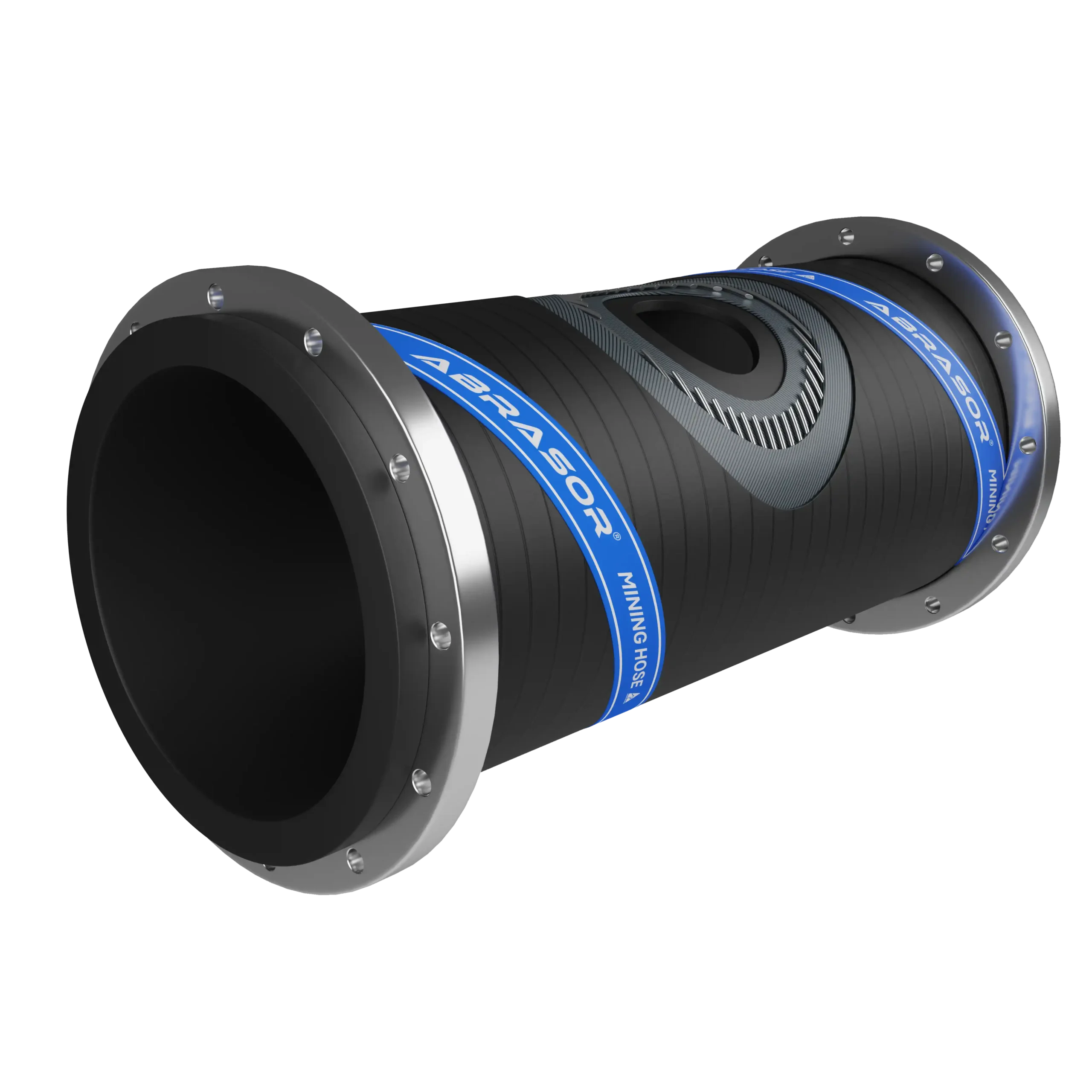
How Pipeline Geometry Affects Slurry Hose Performance
When a slurry hose wears prematurely, the first question is often whether a different hose specification would have lasted longer. While hose selection is important, one of the biggest influences on slurry hose performance is often overlooked: pipeline geometry.
Every bend, reducer, expansion and elevation change affects how slurry flows through a pipeline. Unlike water, slurry contains solid particles with mass. These particles don’t instantly follow changes in the flow path—they continue travelling under their own momentum until they strike the pipeline wall.
Good pipeline design isn’t just about getting slurry from one point to another. It’s about controlling where wear occurs and designing the system to minimise it.
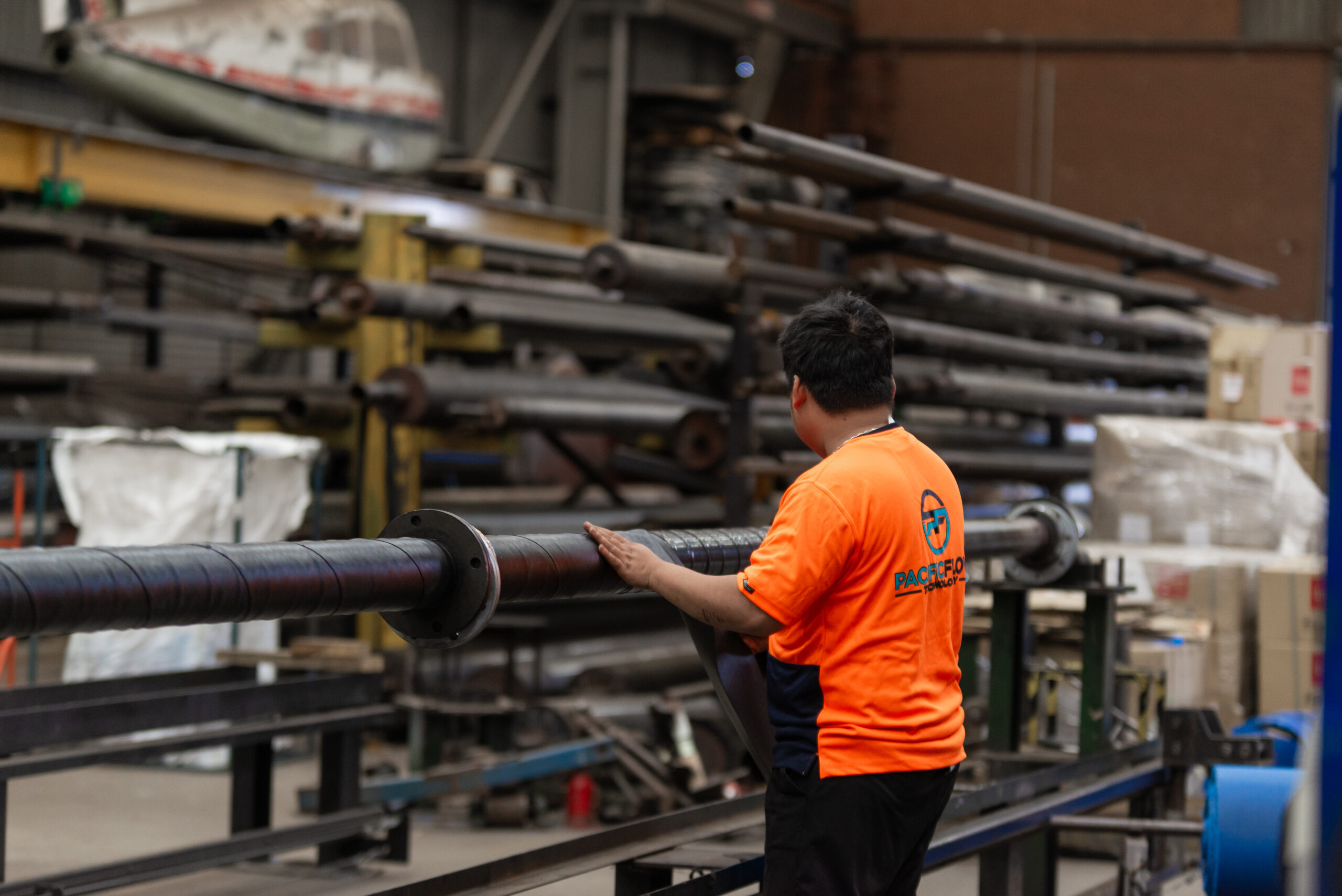
Directional Changes
Directional changes are typically the highest wear locations in a slurry pipeline.
As slurry flows through a bend, the liquid changes direction relatively quickly while the solid particles continue travelling due to inertia. This forces the particles into the outer radius of the bend, creating concentrated wear that is often far more severe than in straight sections.
Where possible, long-radius bends should be used instead of tight elbows. A gradual change in direction reduces particle impact angles and spreads wear over a much larger area, significantly extending slurry hose service life.
Long-radius bends also provide maintenance benefits when flexible slurry hose is used. Rather than manufacturing preformed bends, straight hose lengths can often be flexed into position during installation. As the outer radius wears, the hose can often be rotated during maintenance so a fresh section of liner becomes the new wear surface, extending the life of the assembly before replacement is required.
This approach also reduces the number of pipeline joints and simplifies future maintenance. Highly flexible hose designs, such as our Turboflex® range, can be flexed down to a 2D bend radius, making them ideal for creating smooth directional changes using straight hose assemblies.
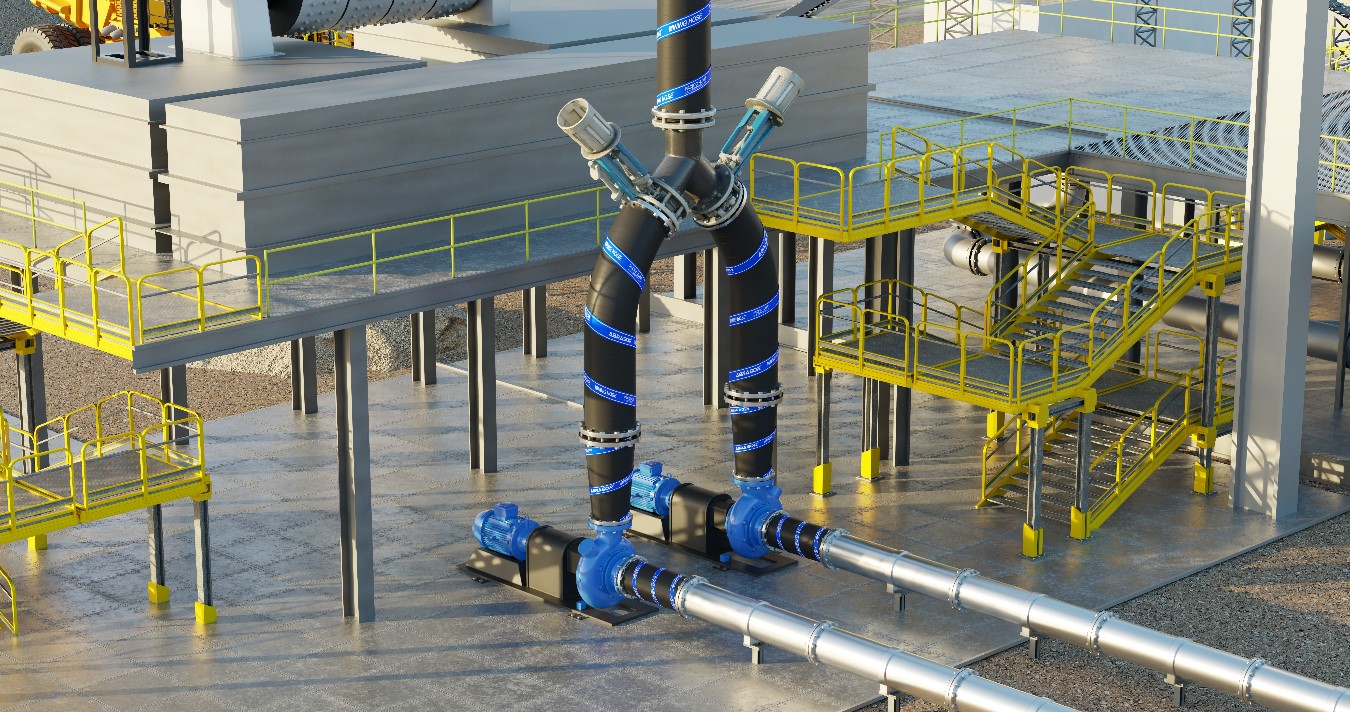
Vertical Transitions
Vertical to horizontal transitions are another common wear location.
As slurry accelerates down a vertical section, the solid particles gain momentum before impacting the lower wall of the horizontal pipeline. This creates a combination of impact and sliding abrasion that can rapidly wear the slurry hose if the transition is too abrupt.
Using smoother directional changes helps reduce impact forces and distributes wear over a greater length of hose.
Pipeline Diameter Changes
Changes in pipeline diameter also influence slurry hose performance.
Abrupt reducers increase slurry velocity and turbulence, causing particles to strike the hose wall with greater energy. Sudden expansions can create recirculation zones where solids settle and repeatedly wear the same area.
Where possible, reducers and expansions should be gradual to maintain stable flow and minimise turbulence. While eccentric reducers are commonly used on pump suction lines to promote smoother flow, the overall transition length generally has a much greater influence on wear than the reducer style itself.
Pipeline Routing
The shortest pipeline is not always the best pipeline.
Every unnecessary bend increases pressure loss and creates another potential wear location. A slightly longer pipeline with fewer directional changes will often deliver significantly longer slurry hose life than a shorter route containing multiple tight elbows.
Considering pipeline routing early in the design process can reduce both wear and ongoing maintenance.
Designing for Maintenance
A common mistake in slurry pipeline design is using slurry hose sections that are too short. Around slurry pumps, it’s common to see multiple short hose spools used alongside reducers, steel spool pieces and filled arch expansion joints. While this achieves the required layout, it often provides very little flexibility.
Longer slurry hose assemblies are often a better solution. The additional length allows the hose to naturally absorb vibration, thermal expansion, pressure pulsations and minor misalignment, reducing loads transferred into the pump and surrounding pipework.
Using longer hose assemblies can also replace multiple components with a single slurry hose, reducing the number of flanged joints, simplifying maintenance and improving overall pipeline reliability.
Key Takeaways
The performance of a slurry hose is influenced by much more than the hose itself. Pipeline geometry determines where particles impact, where turbulence develops and ultimately where wear occurs.
By incorporating long-radius bends, gradual diameter transitions, smooth pipeline routing and maintenance-friendly layouts, engineers can significantly improve slurry hose service life while reducing downtime and total operating costs.
At Pacific Flow Technology, we work with customers to optimise both slurry hose selection and pipeline design, helping deliver more reliable slurry transport systems with lower lifetime maintenance requirements.
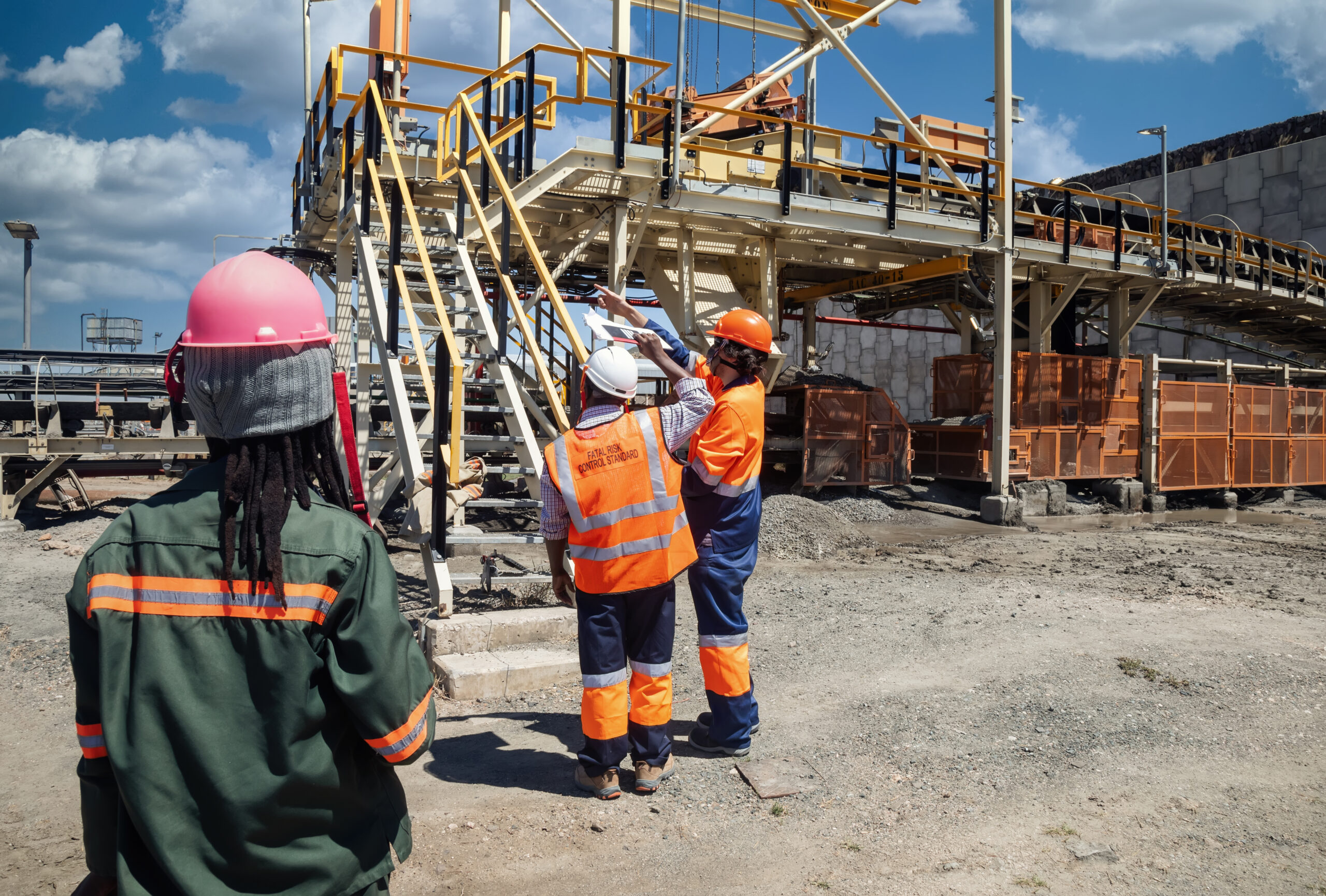
Mining Hose Failure: The 9 Most Common Causes and How to Prevent Them
Mining hoses operate in some of the harshest mining environments, constantly exposed to abrasive slurries, high pressures, rough handling and demanding operating conditions. While a quality mining hose is designed for long service life, premature failures are often caused by incorrect hose selection, poor installation or operating conditions rather than the hose itself.
Understanding the most common causes of mining hose failure can help reduce downtime, improve safety and significantly extend hose service life.
1. Abrasion
Abrasion is by far the leading cause of mining hose failure. Highly abrasive slurries gradually wear away the internal rubber liner until the reinforcement becomes exposed.
Factors affecting abrasion include:
- Particle size
- Slurry velocity
- Solids concentration
- Hose liner compound
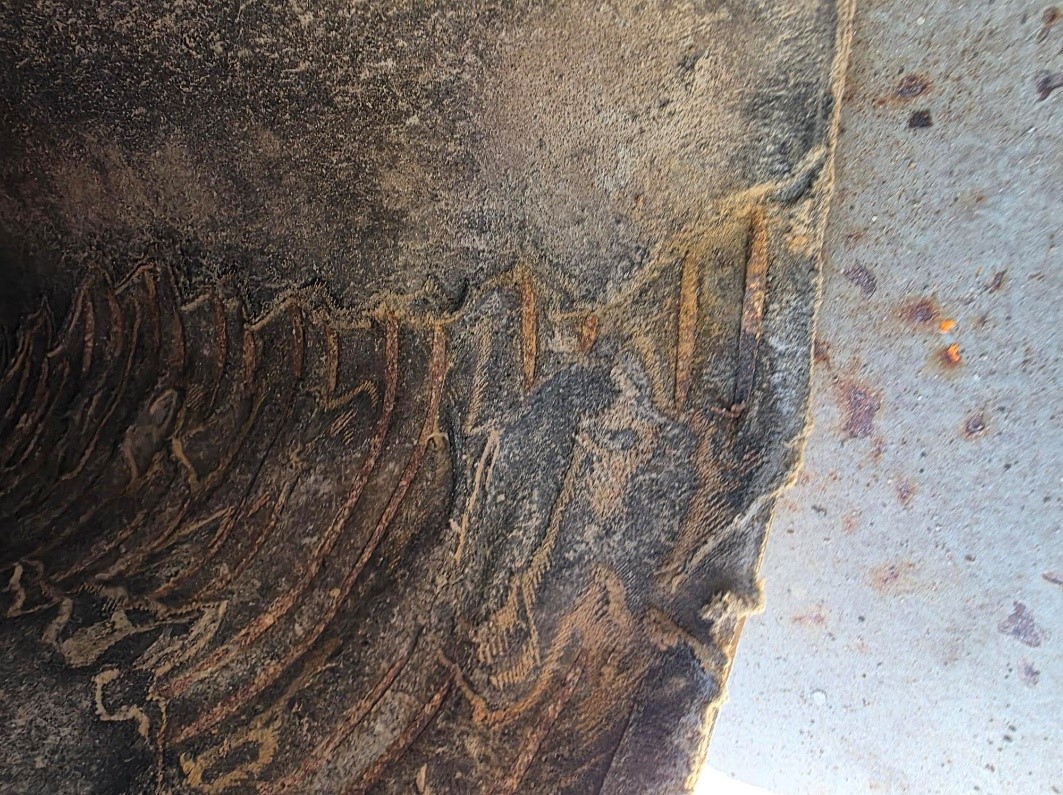
Not all abrasion-resistant compounds perform equally. Some compounds are better suited to fine, high-velocity slurries, while others perform better in coarse, highly abrasive applications. Our exclusive Abrasatech liner, used throughout our Abrasor and Turboflex mining hose range, delivers industry leading abrasion resistance to maximise hose life and reduce replacement frequency. For the most severe wear applications, we also manufacture ceramic lined mining hoses that provide even greater service life.
2. Incorrect Pressure Rating
Selecting a hose with an insufficient working pressure can cause excessive reinforcement fatigue, permanent expansion and ultimately catastrophic failure.
A mining hose pressure rating should be based on:
- Continuous operating pressure
- Pressure spikes
- Pump start up surges
As a minimum, mining hoses should be manufactured with a 4:1 safety factor, meaning the burst pressure is at least four times the maximum working pressure..
3. Excessive Bend Radius
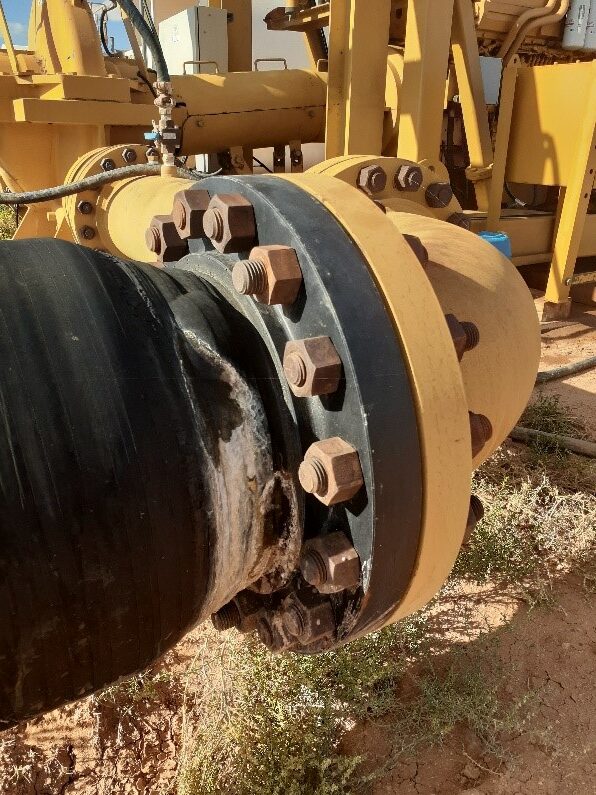
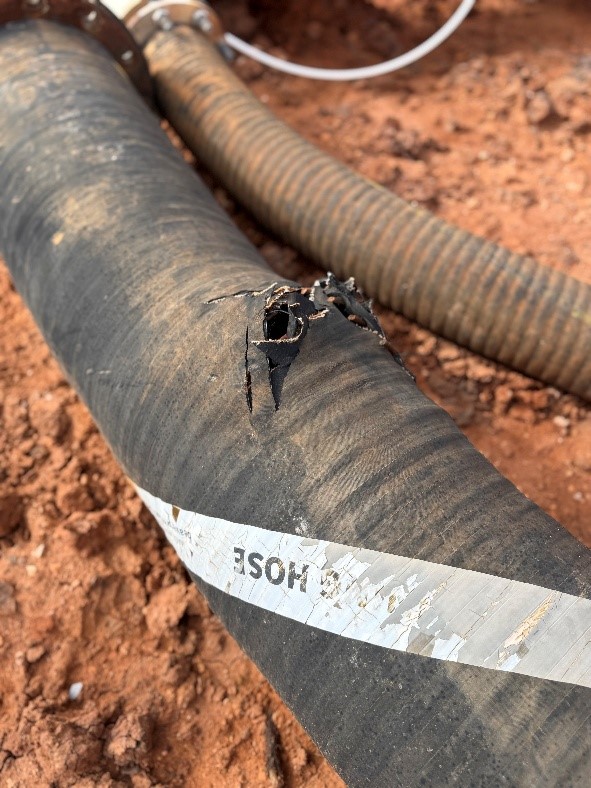
Every mining hose has a minimum bend radius. Bending beyond this limit can prematurely wear the hose and cause permanent damage including:
- Kinking
- Cover cracking
- Reduced pressure capability
- Reduced vacuum resistance
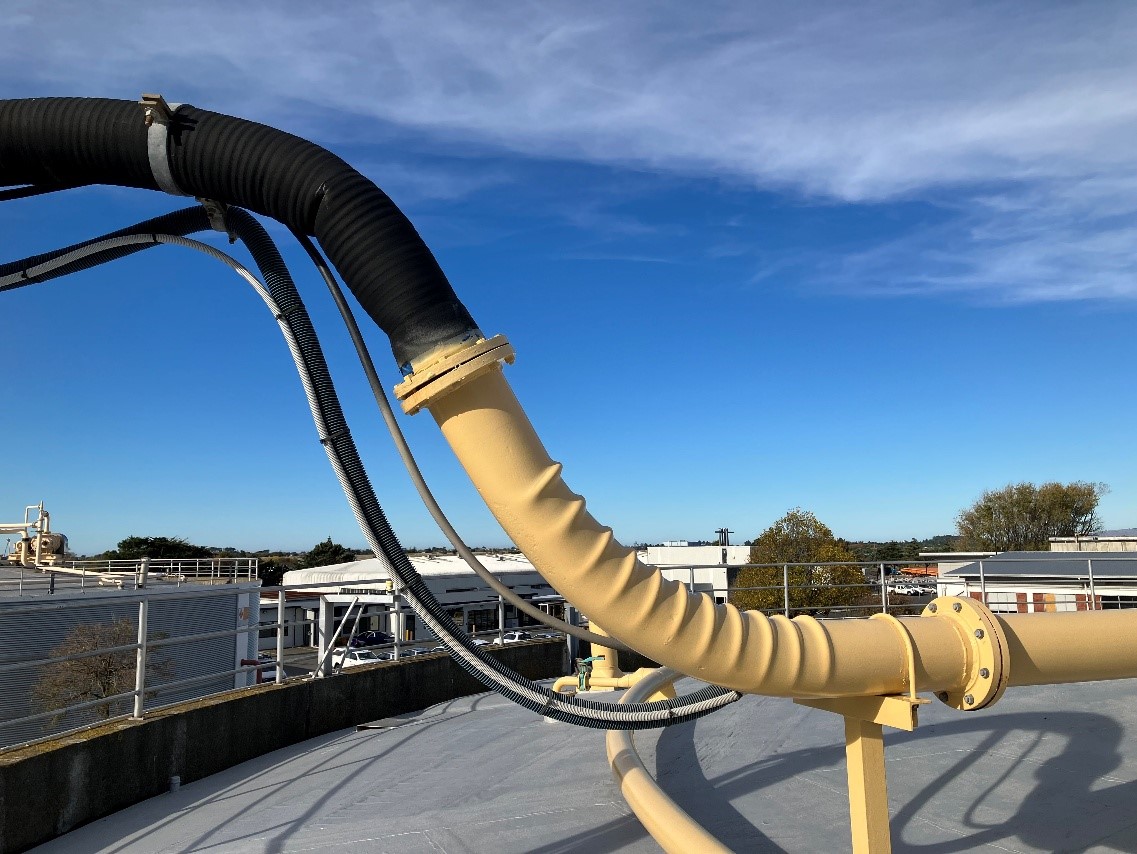
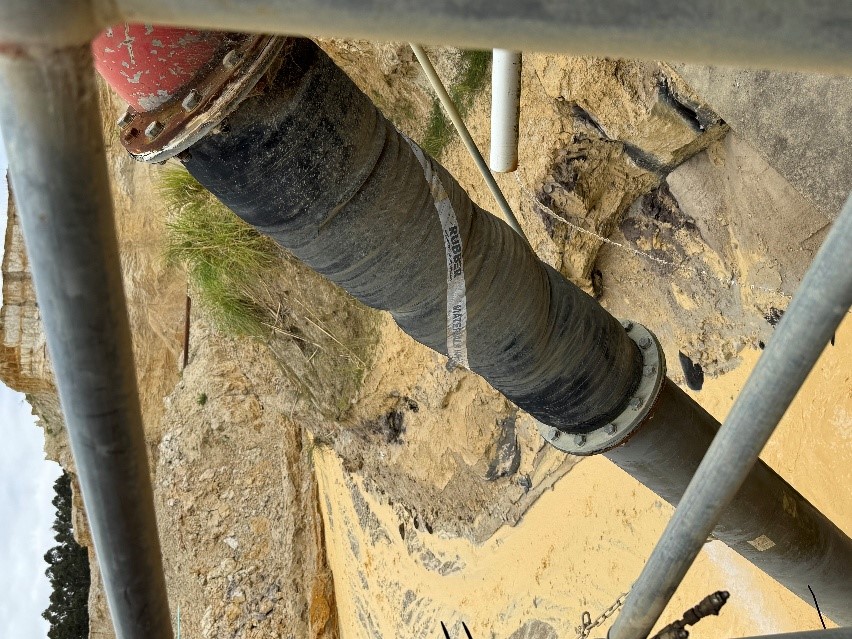
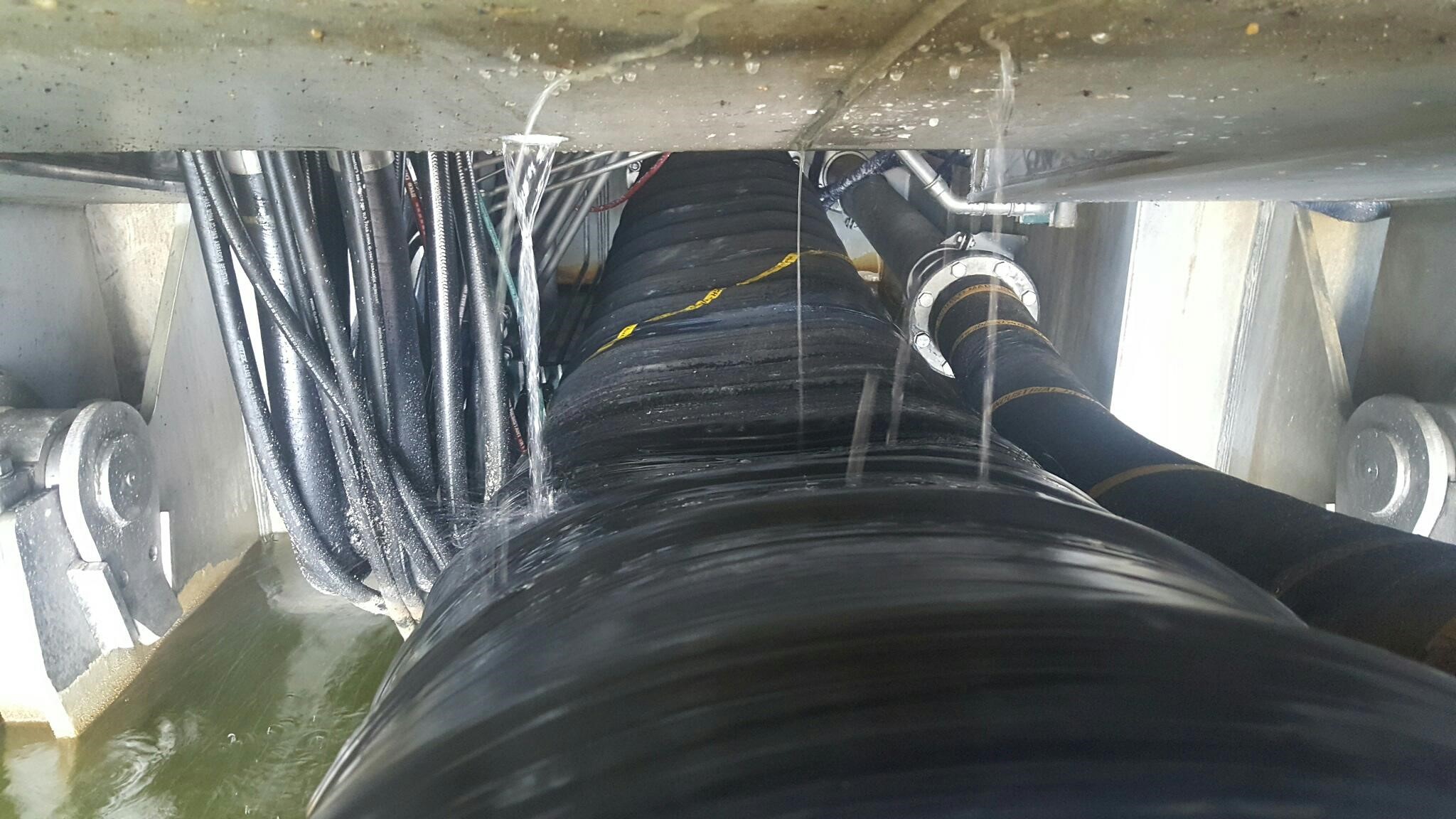
Over flexed mining hoses
Where tight installation spaces cannot be avoided, selecting a more flexible mining hose can dramatically reduce these stresses. Our Turboflex XT10 Series Mining Hose is the most flexible mining hose in the world, and a good option for complex installations.
4. Incorrect Installation
Improper installation is responsible for many avoidable hose failures.
Common installation mistakes include:
- Forcing the hose into position using the flanges and bolt
- Insufficient supports
- Over torquing flange bolts
- Not aligning hose internal diameters
- Bending the hose beyond its recommended bend radius
Correct installation allows the hose to flex naturally during operation and prevents unnecessary stress on both the hose body and end connections. For installation best practices, read our Complete Mining Hose Installation Guide.
5. External Damage
Hard wall mining hoses provide excellent vacuum resistance through their internal wire helix. However, repeated impact from heavy machinery or rough terrain can permanently deform the wire, reducing both vacuum performance and service life.
Where hoses are regularly driven over or subjected to heavy impact, a soft wall mining hose is often a better solution. Without an internal wire helix, it can flex under load without permanent deformation, making it well suited to these demanding applications.
6. Chemical and Heat
Chemical exposure and elevated operating temperatures often work together to accelerate mining hose failure. Not every rubber compound is suitable for every application, and standard hose materials can rapidly deteriorate when exposed to acidic slurries, aggressive process chemicals or excessive heat.
High temperatures accelerate rubber ageing, causing the hose to lose flexibility and mechanical strength, while chemical attack can lead to swelling, softening or cracking. Selecting a hose manufactured with the correct rubber compound for both the process media and operating temperature is essential to achieving maximum service life.
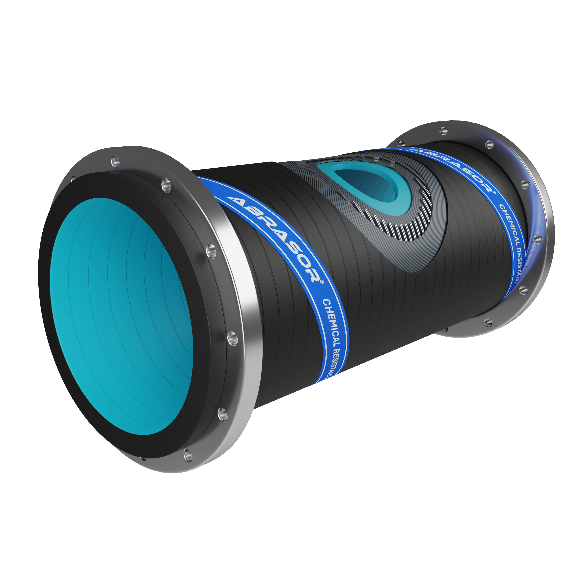
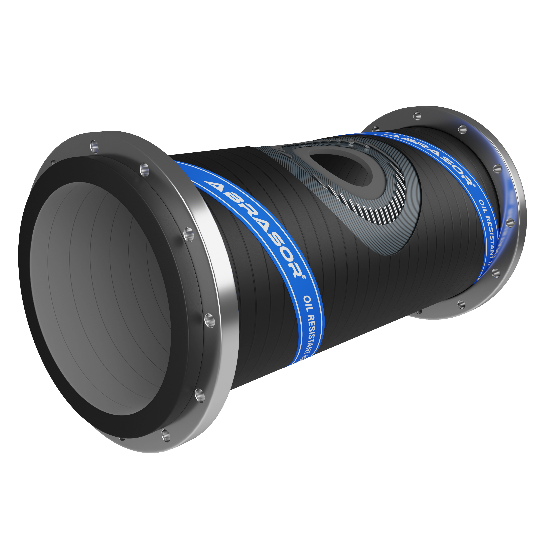
A good example is our work at Glencore’s Murrin Murrin operation, where slurry hoses were experiencing premature failures due to a combination of elevated temperatures and aggressive process media. By redesigning the hose with our Flowtech high-temperature, chemical resistant rubber compound, we increased service life by more than 3X dramatically reducing downtime and replacement costs.
7. Vacuum Collapse
A mining hose operating under vacuum must be specifically designed to resist collapse. This is typically achieved using a spring steel wire helix embedded within the hose wall. Lower quality mining hoses may use undersized wire or mild steel reinforcement, significantly reducing vacuum performance.
All Abrasor and Turboflex mining hoses are manufactured using locally sourced spring steel wire, providing excellent resistance to vacuum collapse and external crushing forces.
8. End Connection Failure
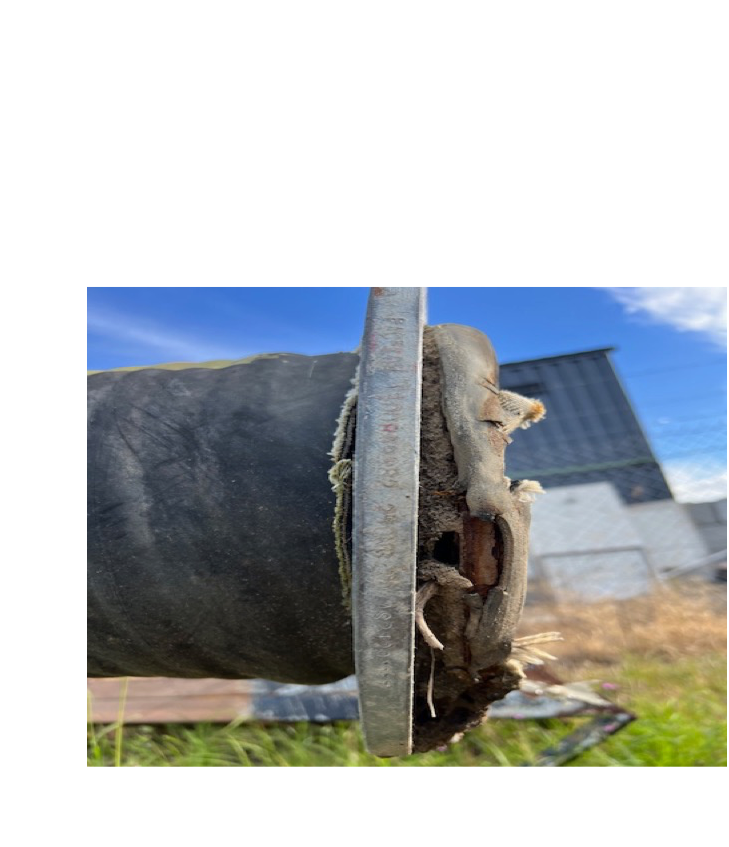
The hose body is often not the first component to fail the end connection is.
Poorly designed or incorrectly installed couplings can lead to:
- Hose pull-out
- Leaks
- Rubber tearing
- End separation
Integrally moulded flanges and reinforced end designs significantly improve end retention and reliability in high-pressure applications.
9. Selecting the Wrong Hose
Many hose failures occur simply because the hose was never designed for the application.
Before specifying a mining hose, manufacturers should be provided with the following information:
- Application
- ID of Connection
- Maximum Pressure
- Service (Suction or Discharge)
- Flexibility Requirements
- Chemical compatibility
- Temperature
Every mining application is different, and selecting the correct hose requires balancing all of these operating conditions not simply choosing the correct diameter.
Preventing Mining Hose Failure
Most premature mining hose failures can be avoided by selecting the correct hose for the application, following proper installation practices and carrying out regular inspections. The table below summarises the most common causes of hose failure and the recommended solution.
| Cause of Failure | How to Prevent It |
|---|---|
| Abrasion | Use an abrasion-resistant liner such as Abrasatech or upgrade to ceramic lining for severe wear. |
| Incorrect Pressure Rating | Specify maximum operating pressure, including pressure spikes and surges. |
| Excessive Bend Radius | Avoid bending hose beyond its recommended radius. Use Turboflex XT10-Series where tighter routing is required. |
| Incorrect Installation | Follow the recommendations in our Mining Hose Installation Guide. |
| External Damage | Select the appropriate hose construction and protect against impact and vehicle traffic. |
| Chemical and Heat | Select rubber compounds specifically designed for the chemicals and temperatures present in the process. |
| Vacuum Collapse | Use a spring steel wire-reinforced suction hose. |
| End Connection Failure | Ensure the hose is fitted with robust end connections suited to the correct pressure and application. |
| Incorrect Hose Selection | Consult experienced mining hose specialists before specifying the hose. |
Selecting the right mining hose from the outset is one of the most effective ways to reduce maintenance costs, minimise downtime and maximise service life. At Pacific Flow Technology, our mining hose experts work closely with customers to design hose assemblies that are tailored to their specific operating conditions, delivering reliable performance in even the most demanding mining environments.
Over $2M of Hydromining Hose Supplied to Century Mine
| Client
|
Location Queensland |
Commodity Zinc |
| Value $2M + Ongoing |
Timeframe 2019-Current |
Application Hydraulic Mining |

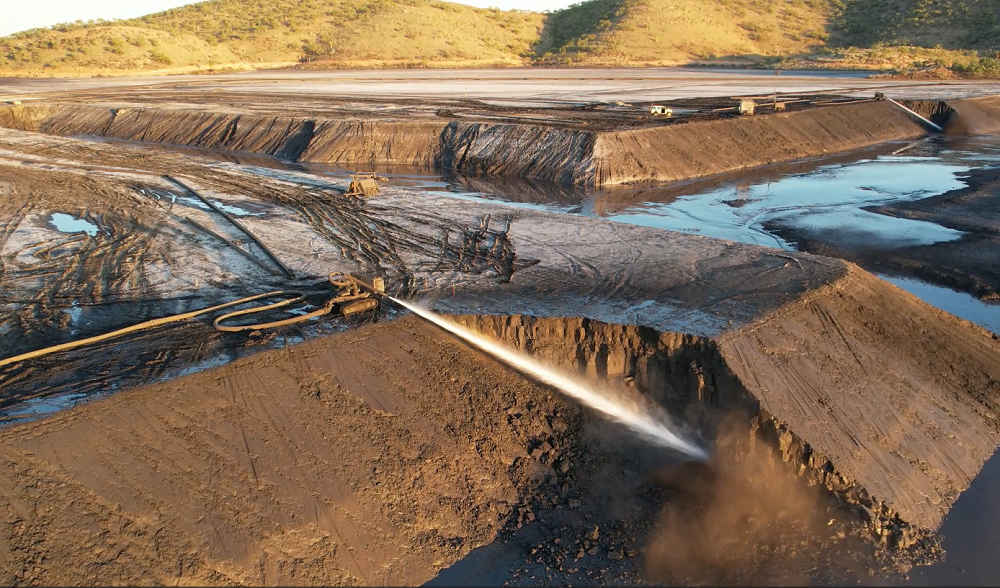
Hydromining feed hoses operate in some of the toughest conditions on a mine site. They must withstand high pressures while remaining flexible enough to move with the monitor and durable enough to handle constant dragging and rough handling.
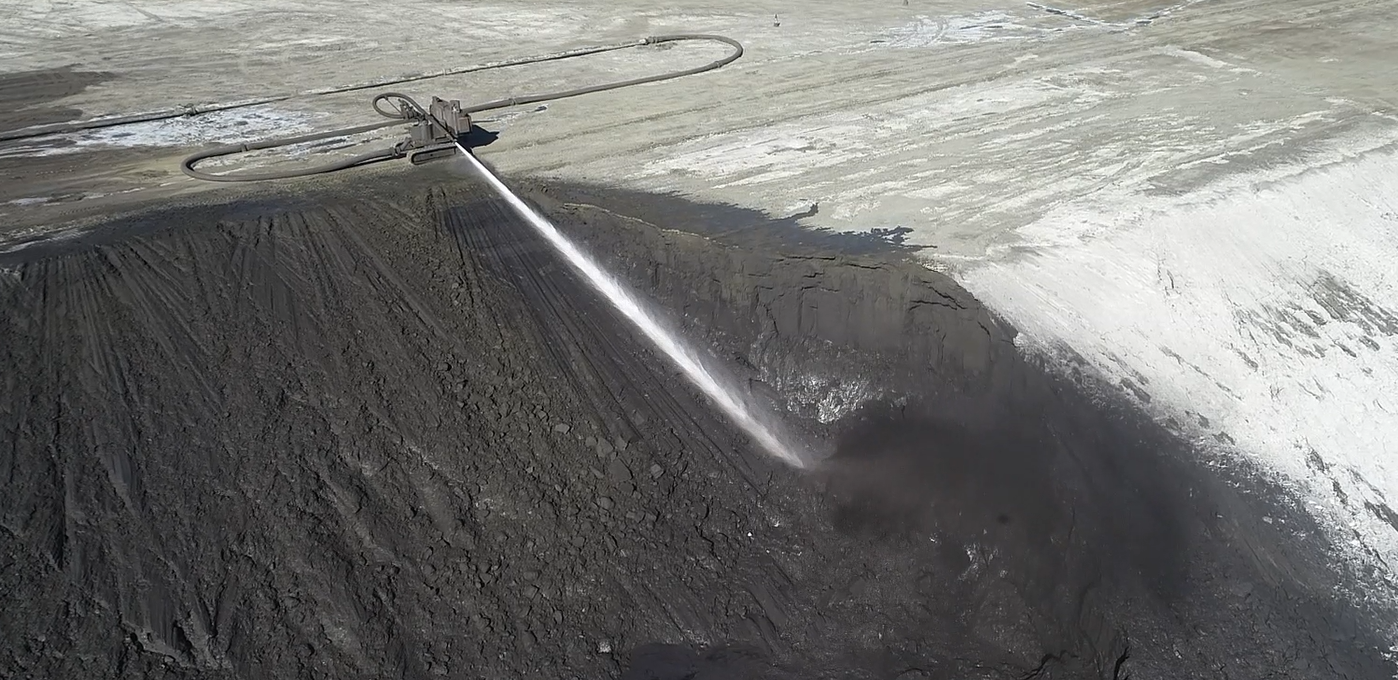
At the Century Mine operated by Sibanye-Stillwater, we have supplied the complete hydromining cannon feed hose package since 2019, with over $2 million in hose assemblies supplied to site. Manufactured in 12-metre lengths and rated to 40 bar working pressure, our Turboflex hose technology provides exceptional flexibility without compromising strength or reliability.
Design Improvements
As part of our ongoing product development, the original built-in coupling design was upgraded to a beaded end construction with swivel flanges. This lighter, more robust design improved handling, simplified installation and significantly increased hose service life.
Traditionally, spigot-end connections have been the standard for high-pressure mining hose applications. By challenging conventional designs and working closely with site personnel, we developed a solution that delivered improved reliability, reduced maintenance requirements and lower operating costs for the hydromining system.
Key Outcomes of Our Design Improvements
- Longer Hose Service Life
- Improved Reliability
- Reduced Equipment Shutdowns
- Easier Installation
- Increase Plant Efficiency
Complete Mining Hose Installation Guide
Complete Mining Hose Installation Guide
Correct installation is one of the most important factors in achieving maximum service life from any mining hose or slurry hose. Even the highest quality hose can fail prematurely if it is handled incorrectly, misaligned during installation, or poorly maintained in service.
Following the below guide will help improve reliability, reduce downtime, and maximise hose life.
1. Safe Handling and Lifting
Mining hoses are most susceptible to damage during handling and installation. Incorrect lifting methods can cause kinking, crushing, or permanent deformation, which may lead to premature failure once in service.
Kinking can be avoided by using the correct lifting techniques.
Recommended Lifting Methods
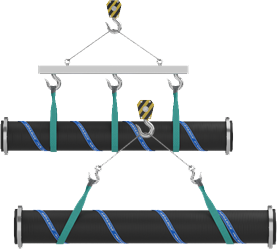
Hoses should ideally be lifted using a spreader lifting bar with fabric straps supporting the hose at three points. This provides even support and minimises bending stress. Refer to Figure 1.1
Where a spreader bar is not available, a two-point lift is acceptable provided the straps are positioned carefully at the quarter points of the hose length. Refer to Figure 1.2
Do not lift from a single point, as this can cause the hose to fold sharply, kink, and suffer internal damage. Refer to Figure 1.3
Never use chains, wire rope, or sharp hooks directly on the rubber cover.
2. Hose ID Alignment
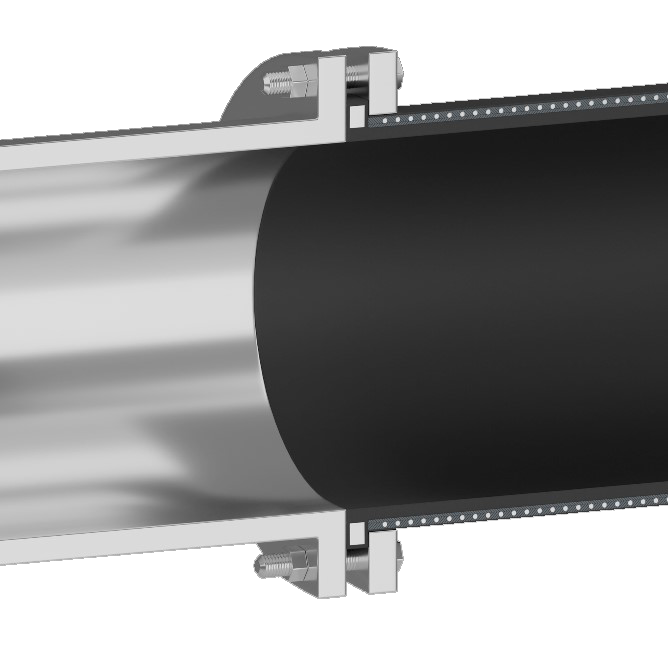
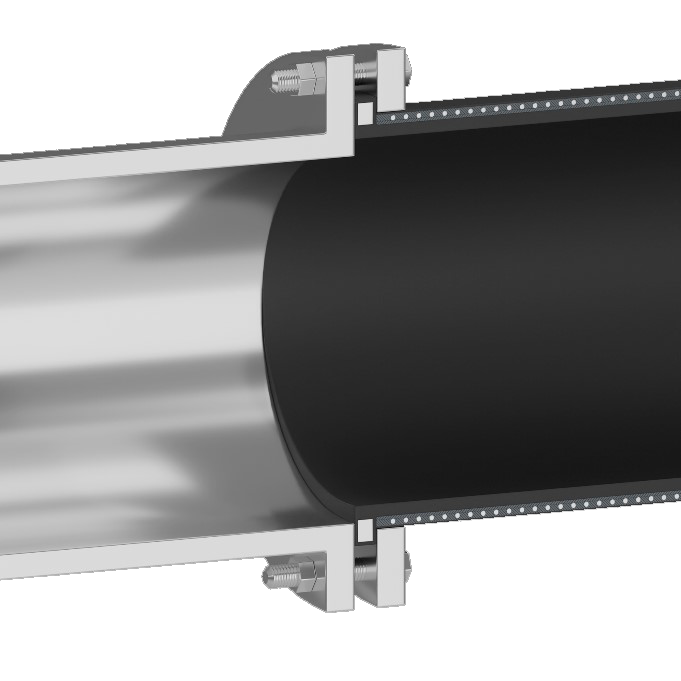
It is critical when installing your mining hose that the internal diameter (ID) of the hose aligns correctly with adjoining pipework.
Poor alignment can create:
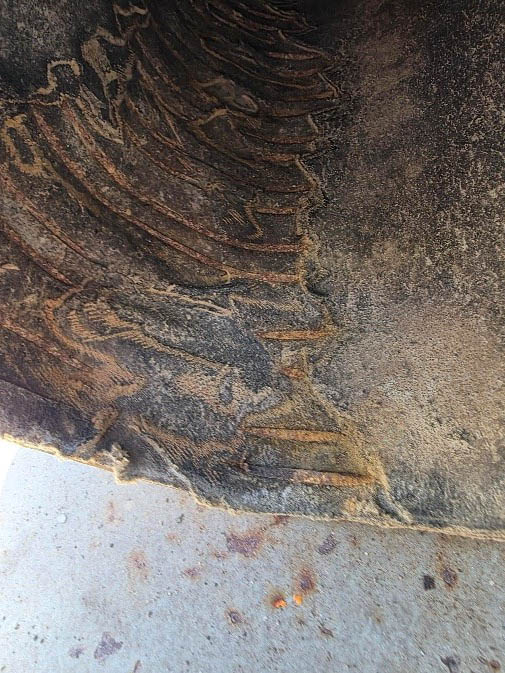
- Premature leading-edge wear
- Turbulent slurry flow
- Pressure loss
- Increased liner wear
- Reduced hose life
The hose should match the adjoining pipeline as smoothly as possible without internal steps or restrictions.
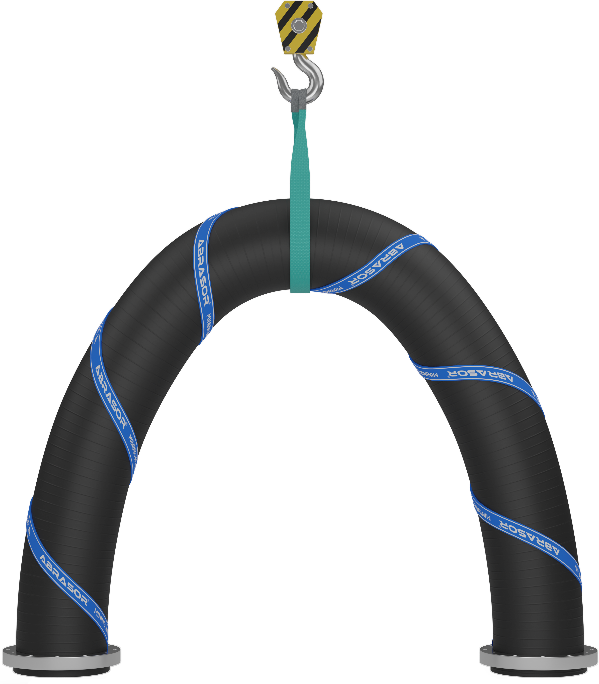
Figure 2.1 shows correct hose ID alignment.
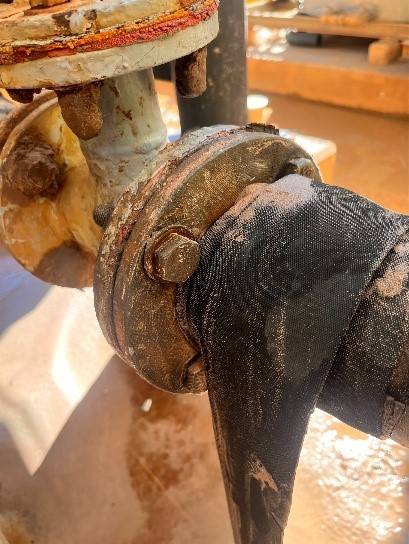
Figure 2.2, 2.3 shows poor ID alignment and resulting premature wear on the leading edge.
Never use the hose to pull misaligned pipework into position.
3. Flange Bolting
Most mining hoses use a beaded end with a self-sealing face. It is important these are bolted correctly using the appropriate torque figures.
Incorrect bolting can result in leaks, movement, damaged beads, or flange distortion.
Rough Starting Torque Guide
(For rubber beaded end mining hose to flat steel flange face only)
| Pressure Rating | Recommended Starting Torque |
|---|---|
| 150 PSI / 10 Bar | 80 Nm |
| 300 PSI / 20 Bar | 100 Nm |
| 450 PSI / 30 Bar | 200 Nm |
Important: These torque values do not apply to other connection styles such as:
- Rubber-to-rubber joints
- Fixed flanges
- Flanged couplings
- Victaulic ends
Different procedures may apply.
For a complete bolting guide, refer to our Mining Hose Bolt Torque Guide.
4. Hose Positioning and Support
Long runs of mining hose should always be properly supported to reduce strain on the hose ends and flanges. Failure to support correctly can lead to premature wear, leakage, or structural failure.
General Support Guidelines
- Horizontal hose runs should typically be supported every 2 metres
Refer to Figure 4.1 - Use smooth, non-abrasive supports to avoid damaging the outer cover
- Add protective padding where supports contact the hose
- At bends, use curved supports to maintain the minimum bend radius
Refer to Figure 4.3 - For vibrating or moving equipment, use rollers or flexible brackets that allow controlled movement
- Never allow the hose to carry the weight of unsupported steel pipework

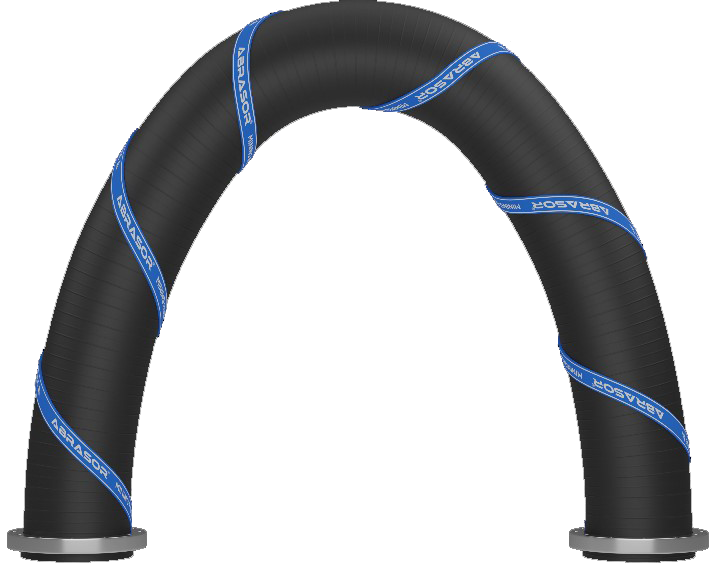
Bend Radius
When flexing a hose into place, always confirm the hose remains within its minimum bend radius.
If bent tighter than recommended, the hose may kink and fail prematurely.
Refer to Figure 4.4 for how to calculate minimum bend radius.
- Mining hose bend radius is commonly expressed as a multiple of the hose nominal bore (NB), referred to as “D”
- For example, a 6D bend radius on a DN150 hose means:
6 × 150 mm = 900 mm bend radius
5. Maintenance and Inspection
Routine inspection and maintenance will significantly increase slurry hose life.
Recommended Maintenance
- Rotate the hose 90 degrees at regular intervals to promote even wear
- Flush or drain the hose after use where possible
Inspection Checklist
Regular inspections should check for:
- External cover wear or cuts
- Kinking or over-flexion
- Liner wear
- Loose bolts or leaks
Replace hoses showing signs of serious deterioration before failure occurs.
6. Storage
When not in use, mining hose should be stored correctly to preserve rubber life.
Storage Recommendations
- Store in a cool, dry location
- Keep away from direct sunlight
- Keep away from high temperatures or heat sources
Correct storage helps prevent rubber hardening, cracking, and premature ageing.
Final Thoughts
Correct handling, alignment, bolting, support, and maintenance are all essential to maximising mining hose performance.
A properly installed hose will provide:
- Longer service life
- Reduced downtime
- Improved safety
- Better wear performance
- Lower total operating cost
If unsure about any installation detail, always consult your mining hose supplier before commissioning.
Mining Hose Bolt Torque Guide
Mining Hose Bolt Torque Guide
In mining and slurry pipelines, correct flange bolt torque is essential for safe, leak-free hose performance.
Unlike rigid steel pipe, mining hose contains rubber components that compress during tightening. This means bolt tension can reduce after the first pass, requiring multiple tightening cycles to achieve the correct final clamp load.
Step 1: Confirm the Connection Type
These torque values are intended for bolting a rubber beaded end mining hose to a flat steel flange face.
It is also important to understand that every application is different. Pressure, end construction, hose application, bolt grade, can all influence the final torque required.
The values below should therefore be used as a general installation guide only.
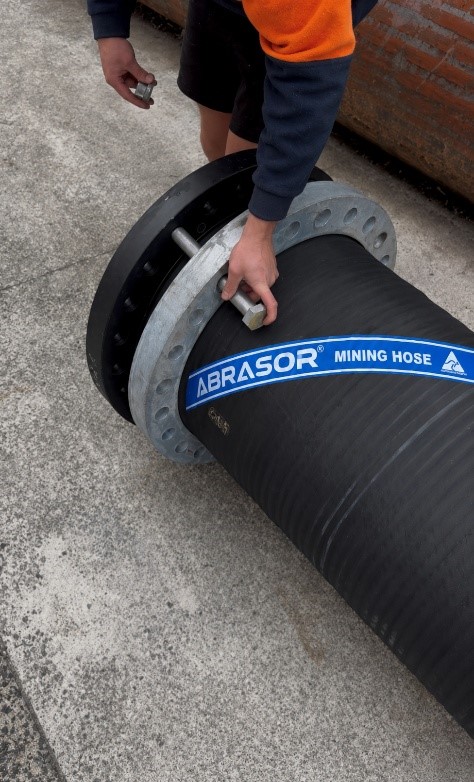
Step 2: Select the Starting Torque
| Pressure Rating | Recommended Starting Torque |
|---|---|
| 150 PSI / 10 Bar | 80 Nm |
| 300 PSI / 20 Bar | 100 Nm |
| 450 PSI / 30 Bar | 200 Nm |
Please note the above torque values do not apply to different connection styles such as rubber-to-rubber joints, fixed flanges, flanged coupling or Victaulic ends. For these styles different procedures may apply.
Step 3: Check Hose and Flange Alignment
Before tightening, make sure:
- Hose ID is aligned with the pipe ID
- Flange faces are square
- The hose is not twisted
- Bolts are not being used to pull pipework into position
Poor alignment can cause leaks even when the bolts are torqued correctly.
Step 4: Fit Bolts and Hand Tighten
Install all bolts, nuts, and washers.
Hand tighten first so the flange faces pull together evenly.
Do not fully tighten one bolt at a time.
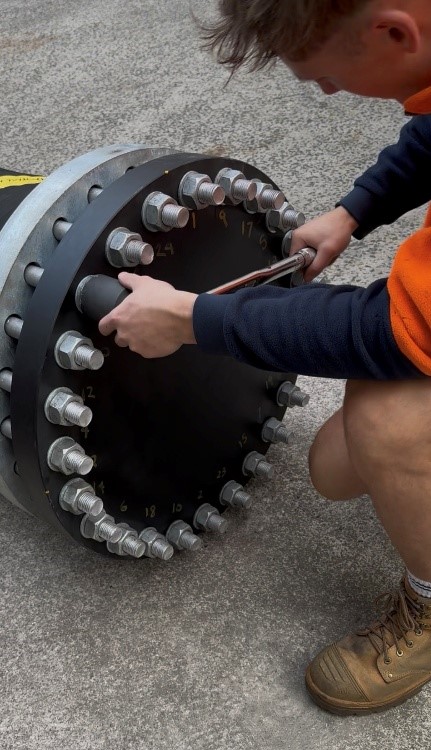
Step 5: Torque in a Star Pattern
Tighten bolts in a star pattern to apply even pressure across the rubber bead.
For an 8 bolt flange the sequence will look like the above diagram
Step 6: Complete Minimum 3 Torque Passes
Because rubber absorbs pressure and settles under load, bolts must be gone over at least three times at full load.
Recommended method:
| Pass | Torque |
|---|---|
| Pass 1 | 75% of target torque |
| Pass 2 | 100% of target torque |
| Pass 3 | 100% of target torque |
| Pass 4 | 100% of target torque |
Please note the above torque values do not apply to different connection styles such as rubber-to-rubber joints, fixed flanges, flanged coupling or Victaulic ends. For these styles different procedures may apply.
Step 7: Inspect for Leaks
Once the hose is installed and pressurised, inspect the flange joint for leaks.
Check for:
- Weeping around the flange
- Uneven compression
Step 8: Increase Torque Only if Required
If the hose continues to leak after the correct torque procedure:
- Increase torque in 20 Nm increments
- Retorque using the star pattern
- Go around the flange evenly
- Recheck for leaks after each increase
It is critical to increase torque in small increments. Over torquing can distort the flange or backing ring causing premature wear or failure.
Step 9: Final Check
Before putting the hose into full service, confirm:
- All bolts have been torqued evenly
- There are no leaks
- The hose is not under twist or strain
- Supports are correctly positioned
Correct bolt torque, alignment, and installation procedure are critical to achieving safe and reliable mining hose performance.
What Makes a High Quality Mining Hose
What Makes a High Quality Mining Hose?
In mining operations, hose failure is never just an inconvenience. A burst or prematurely worn hose can stop production, create safety risks, spill slurry, and drive up maintenance costs. That is why selecting a high quality mining hose is one of the most important decisions in any slurry handling system.
While many hoses may appear similar on the outside, the real difference lies in the materials, engineering, and manufacturing quality behind them. A premium mining hose is designed not just to work, but to deliver longer wear life, safer performance, and lower total cost over time.
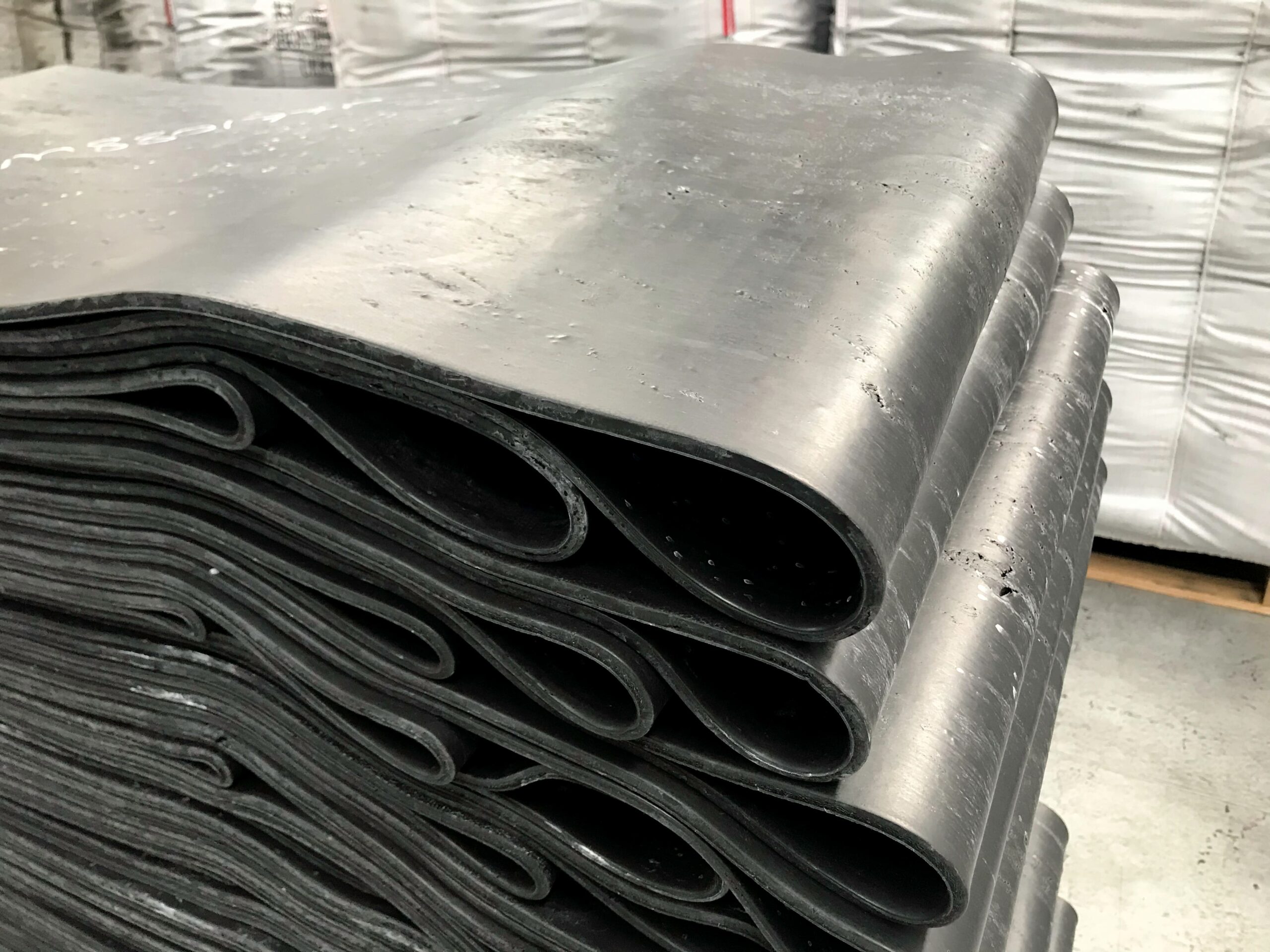
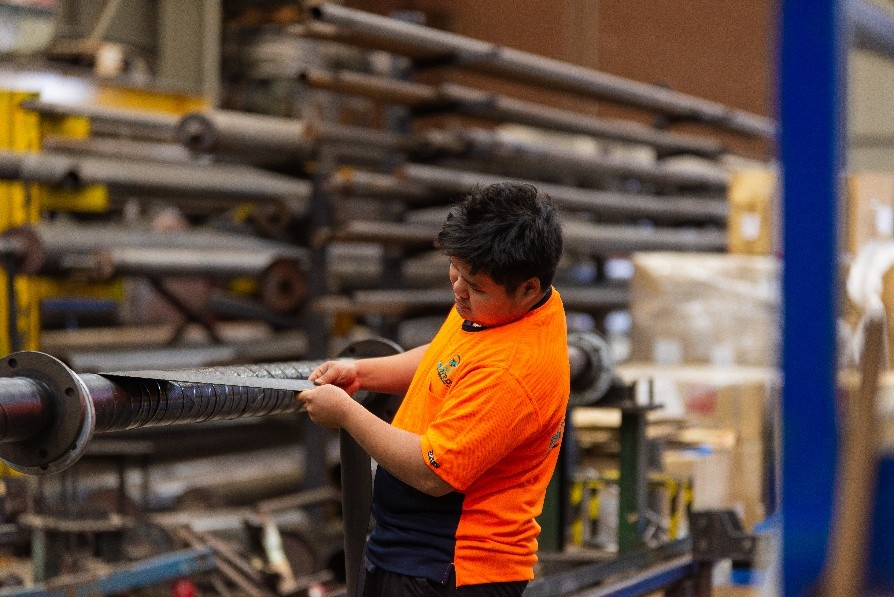
1. Liner Abrasion Resistance
The single biggest factor in mining hose performance is the quality and thickness of the inner liner.
Mining slurry often contains highly abrasive particles such as silica, iron ore, coal fines, and mineral concentrate. These materials continuously wear away at the inside of the hose during operation. A high quality hose uses specially developed rubber compounds with low abrasion loss, reducing liner wear and extending service life.
Liner thickness is equally important. A thicker wear liner provides more sacrificial material, increasing overall hose life in abrasive duties.
Low quality hoses may use cheaper rubber blends or thinner liners that wear rapidly, crack early, or harden over time. While cheaper upfront, they often cost far more through frequent replacements and downtime.
In some applications, we have seen up to 5x longer wear life when comparing our Abrasatech liner to lower quality equivalent abrasion-resistant liners.
2. Strong Reinforcement Construction
A mining hose must withstand internal pressure, vacuum, and external forces such as flexing, dragging, vibration, and movement.
Key reinforcement features found in a high quality mining hose include:
- High tensile textile reinforcement
- Multiple ply carcass construction matched to pressure rating
- Correct gauge spring steel wire helix to prevent collapse under vacuum or flexing
Incorrect textile selection or under-gauge mild steel wire can lead to failures such as collapse under vacuum or bursting under pressure.
3. Reliable End Connections
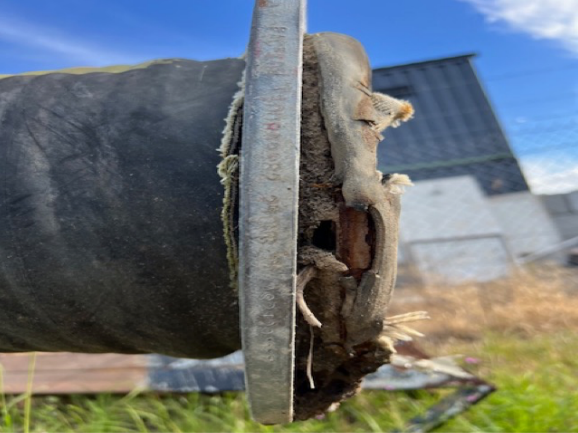
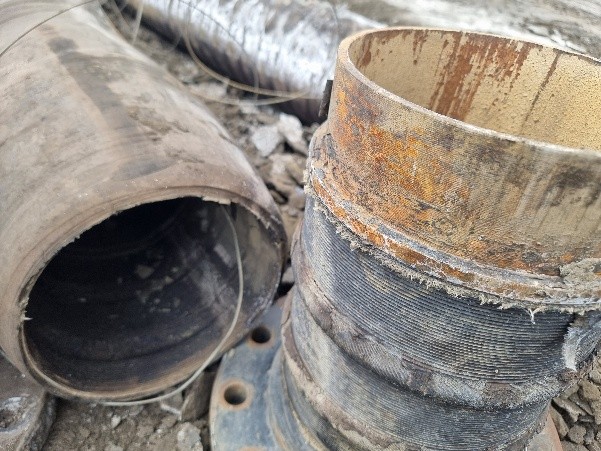
Many hose failures occur at the ends rather than the hose body itself. Poorly designed beaded ends or couplings can lead to leaks, pull-outs, or catastrophic failures.
Common failures we see from poorly designed ends include:
- Leaking couplings
- Flange pull outs
- Coupling detachment from hose body

4. Flexibility Without Kinking
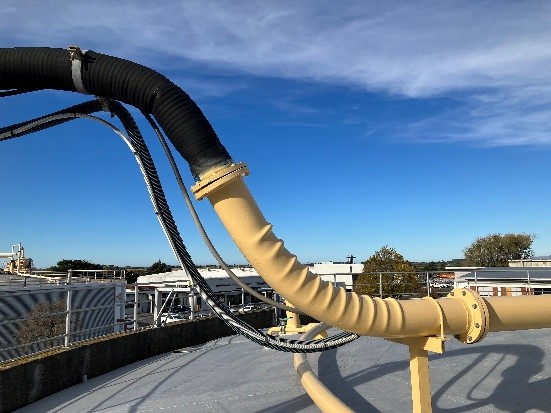
High quality hoses maximise flexibility without compromising structural integrity. Hoses lacking flexibility often kink, flatten, or wear prematurely, causing flow restrictions and shorter service life.
Ultra-flexible hose designs such as our Turboflex range flex smoothly while maintaining internal bore shape.
Mining hose needs enough flexibility to absorb vibration, allow movement, and simplify installation.

5. Consistent Manufacturing Quality
Even the best materials mean little without controlled manufacturing standards.A high quality mining hose should be built under strict quality management system.
The best way to assure consistent quality is to find a manufacture with an ISO9001 approved quality management system.
Why Cheap Hose Often Costs More
Low-cost hoses may reduce purchase price, but hidden costs usually outweigh the savings:
- More frequent changeouts
- Production downtime
- Labour costs
- Emergency freight
- Safety incidents
- Higher total cost per operating hour
A longer lasting hose with higher upfront value often becomes the cheapest option over its life cycle.

Final Thoughts
A high quality mining hose is not defined by appearance alone. It is the result of premium liner compounds, strong reinforcement, over designed end connections, controlled manufacturing, and real-world proven performance.
When selecting hose for mining service, focus on wear life, reliability, and total cost of ownership rather than purchase price alone.
In demanding slurry applications, the right hose can save thousands in downtime and maintenance while keeping your operation running safely and efficiently.
Solving BHP’s Reeling Hose Issues
Solving BHP’s Reeling Hose Issues
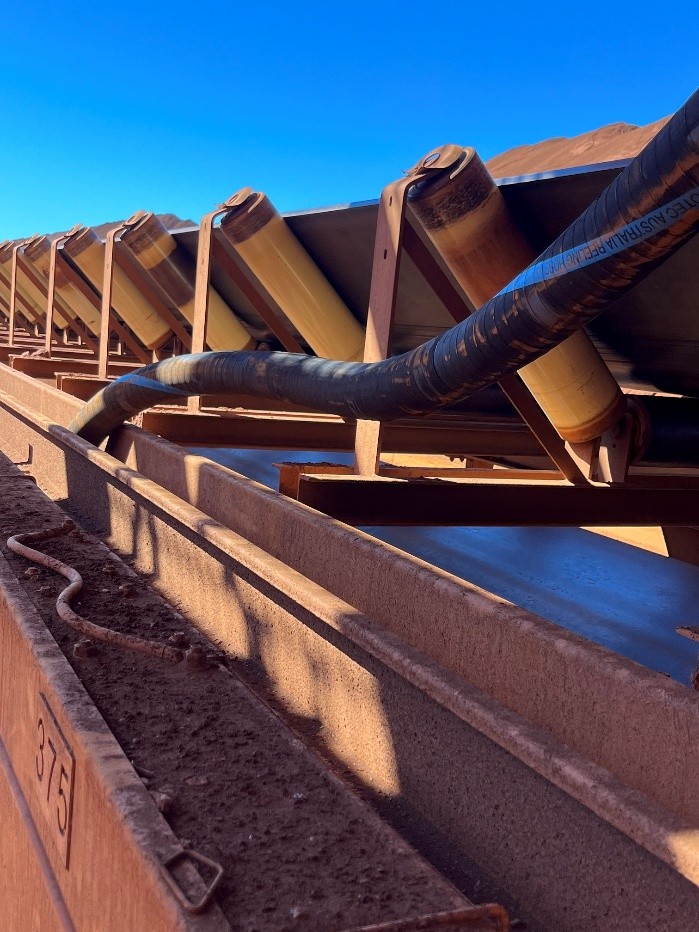
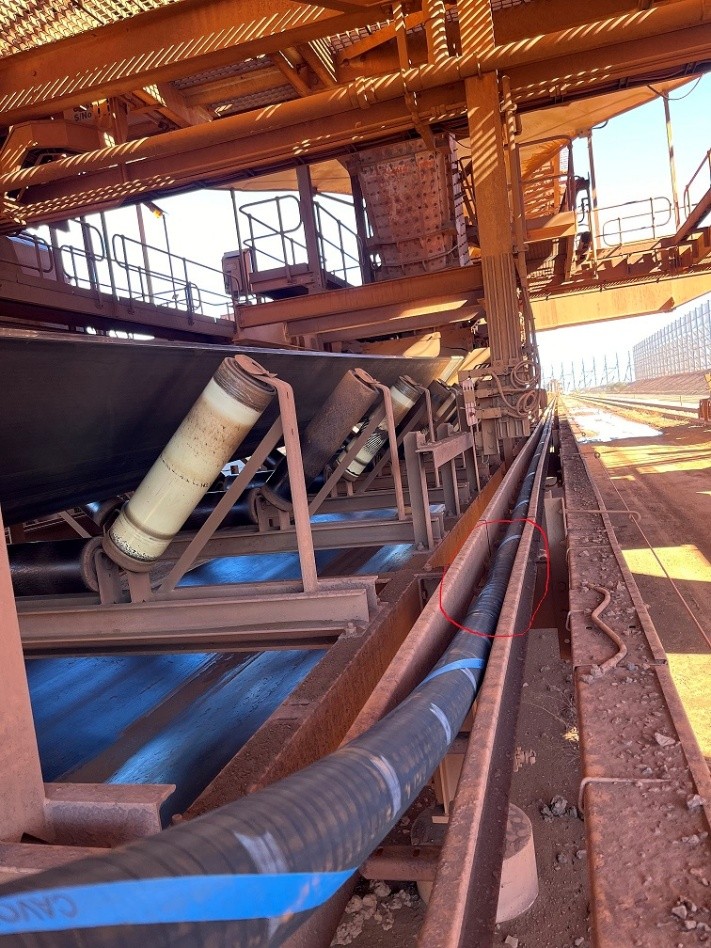
We were approached by SGC Australia in 2024 to help resolve ongoing reeling hose issues affecting BHP operations. Their existing long-length hoses were developing a pronounced “banana” effect at each individual join, creating problems when winding and unwinding on stackers and reclaimers.
With 24 hoses replaced every four years across these machines, the issue was creating unnecessary maintenance costs, downtime, and operational inefficiency.

-
Client
BHP
-
Engineer
SGC Australia
-
Commodity
Coal
-
Location
Western Australia
-
Value
$600k Ongoing
-
Total hose supplied
4,000mt Ongoing
The Problem
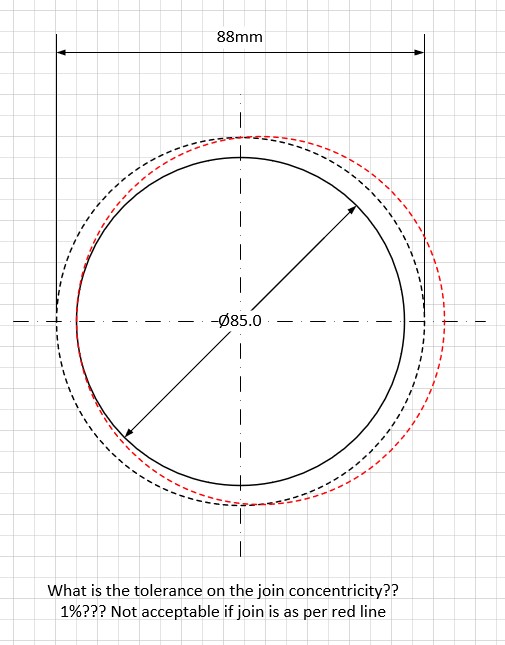
Joining already-cured hose into long continuous lengths is highly specialised work, particularly when metal joiners cannot be used. In stacker and reclaimer applications, hoses must reel smoothly over drums and guides, meaning the hose needs to remain continuous, concentric, and free from protruding metal connections that can create catch points.
When joins are poorly executed, the hose can lose its concentricity through the splice area, causing the hose to bend or twist at each join. This creates the common “banana” effect, leading to:
- Poor tracking during reeling and unreeling
- Increased stress on hose carcass and reinforcement
- Premature wear at joins
- Reduced hose service life
- Higher maintenance intervention
Our Solution
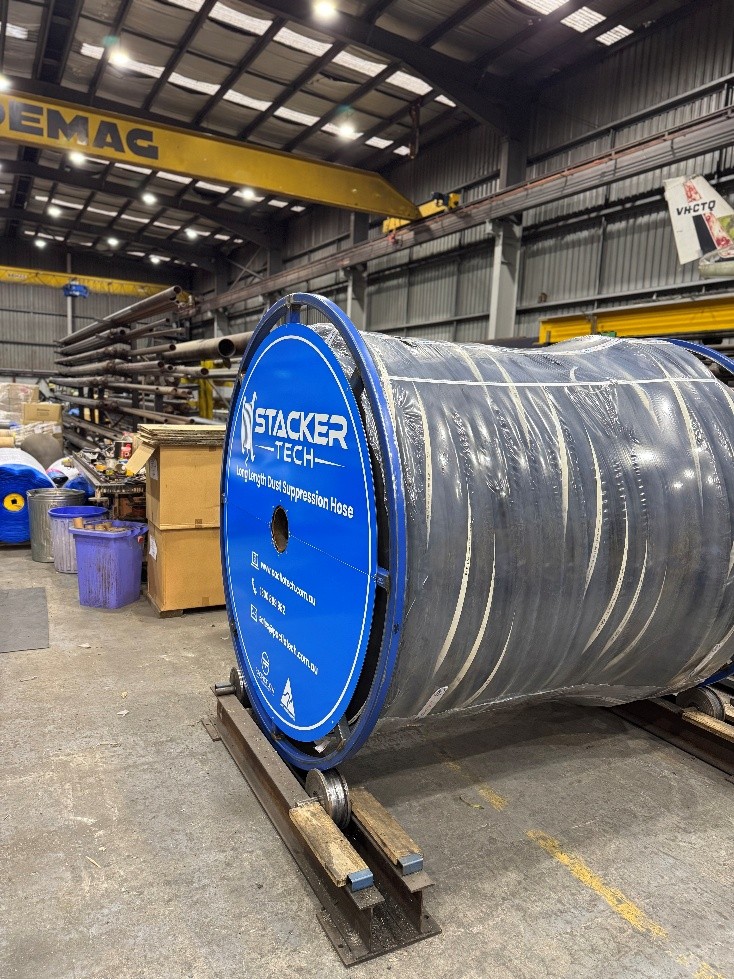
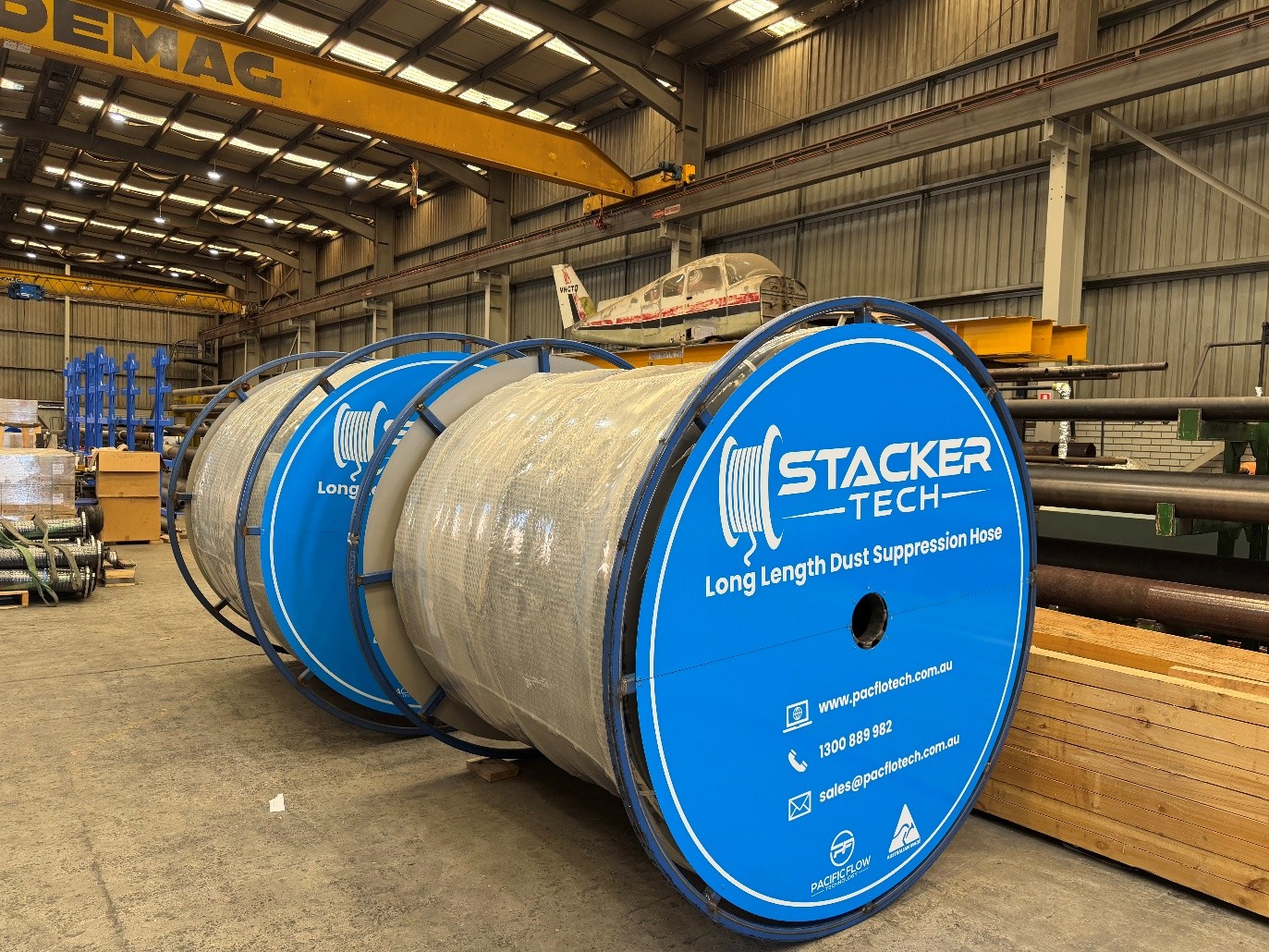
To solve the problem, we supplied our Stackertech XL Series Long Length Reeling Hose, a solution already proven across multiple mine sites throughout Australia.
Our design focused on eliminating the root causes of previous failures:
- Over-engineered splice joins designed to maintain concentricity
- Continuous rubber-moulded joins with no metal catch points
- Spliced every 120 metres, significantly reducing total join numbers
- Double the tensile strength of the existing product
- Built for constant winding and unwinding cycles on heavy-duty equipment
By reducing the number of joins and increasing structural integrity, the hose delivered a far more reliable reeling solution.
The Outcome
We have now supplied multiple reels to BHP as part of the changeout program to replace the problematic hoses. Since installing our Stackertech solution:
- Improved winding and unreeling performance
- Longer hose service life
- Reduced shutdown frequency
- Lower maintenance demand
- Increased plant efficiency across WA operations
This project demonstrates how correct hose engineering and specialised long-length joining technology can significantly improve reliability in stacker and reclaimer applications.
Increased Safety and Wear Life at Glencore’s Murrin Murrin Site
Increased Safety and Wear Life at Glencore’s Murrin Murrin Site
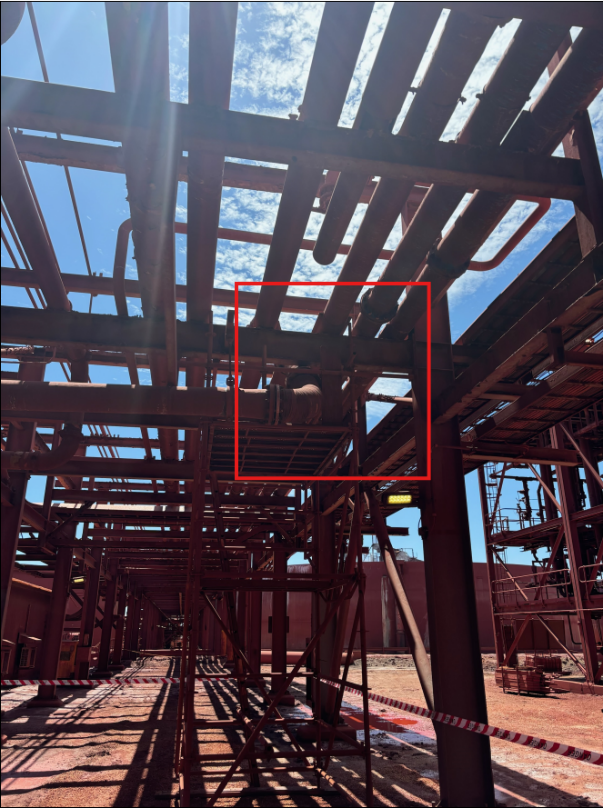
We were approached by Glencore’s Murrin Murrin Site to solve a serious issue affecting their leached slurry processing pipelines. Their existing mining hoses were failing prematurely, creating hazardous conditions where high-temperature acidic slurry was leaking and forcing sections of the plant to be barricaded off.
With hose life averaging only 12 weeks, the site was also dealing with frequent shutdowns, increased maintenance demand, and costly downtime.

-
Client
Glencore
-
Service
Mining Hose
-
Application
Acidic Slurry Process Piping
-
Commodity
Nickel and Cobalt
-
Location
Western Australia
-
Value
$100K +
The Problem
High-temperature mixed sulphide slurry creates one of the most demanding environments for rubber mining hose. Standard abrasion-resistant rubber compounds often lack the temperature and chemical resistance required for this duty. Conversely, many compounds designed for heat and acid resistance do not provide sufficient abrasion performance.
The existing hose solution did not utilise a compound capable of balancing all three critical requirements:
- Abrasion resistance
- High-temperature resistance
- Acid resistance
As a result, premature wear led to repeated failures, unsafe leaks, and ongoing operational disruption.
Our Solution
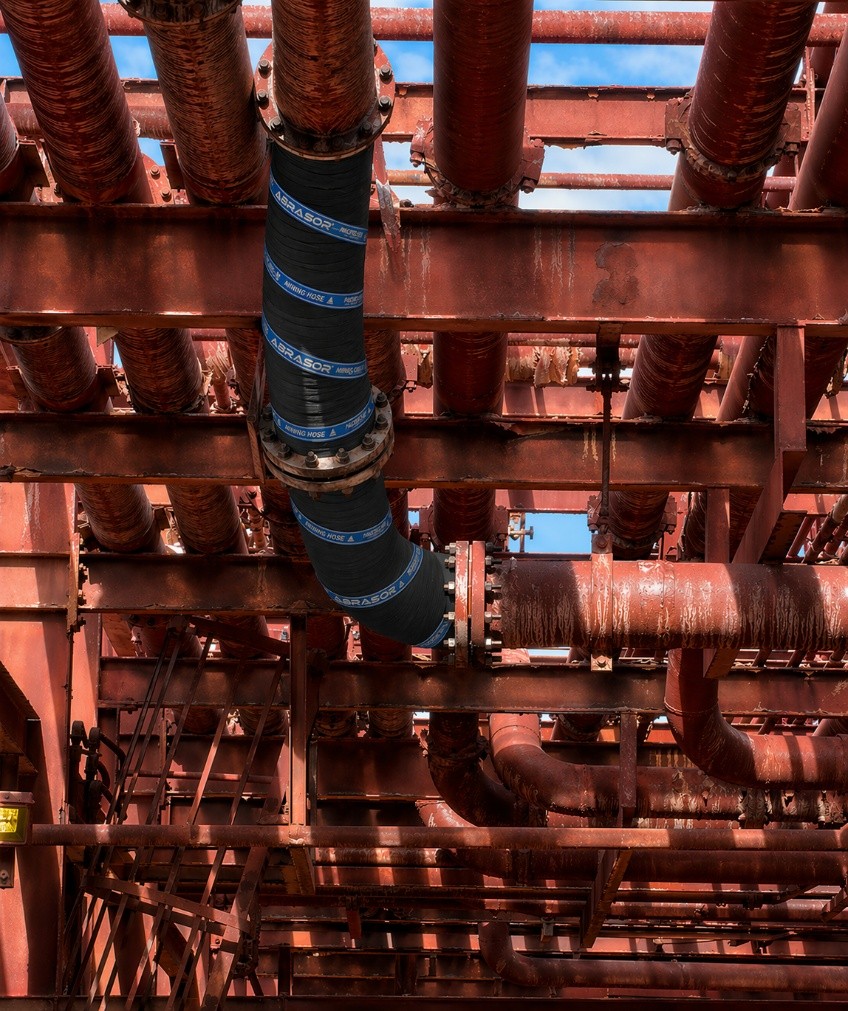
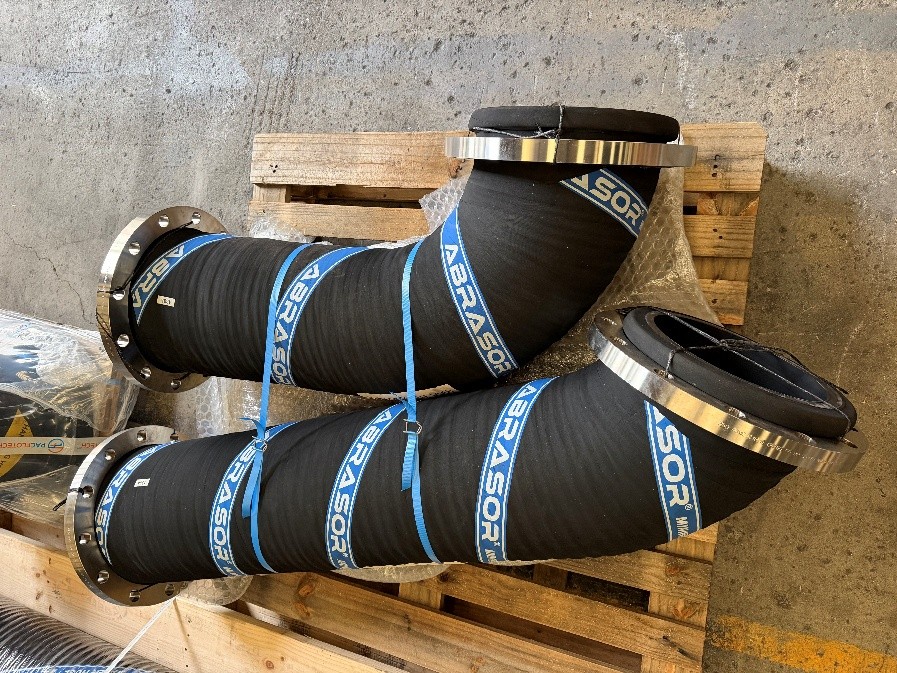
To meet this challenging duty, we supplied our Abrasor X30 Series Preformed Bends using our proprietary Flowtech liner compound.
Flowtech is an EPDM-based rubber compound engineered to provide:
- Excellent heat resistance
- Strong acid resistance
- Reliable abrasion performance
- Longer service life in aggressive slurry applications
From initial engagement through to delivery, we had the hoses manufactured and on site within just 6 weeks, helping the maintenance team rapidly address a critical plant risk.
The Outcome
Since replacing the previous hoses with our Abrasor solution, site performance has improved significantly:
- More than 3x wear life compared with the previous supplier
- Fewer shutdowns and replacement intervals
- Lower maintenance costs
- Improved plant availability
- Removal of hazardous leak conditions caused by premature failures
This project delivered a major reliability and safety improvement for the maintenance team, while reducing the total cost of ownership across the pipeline system.
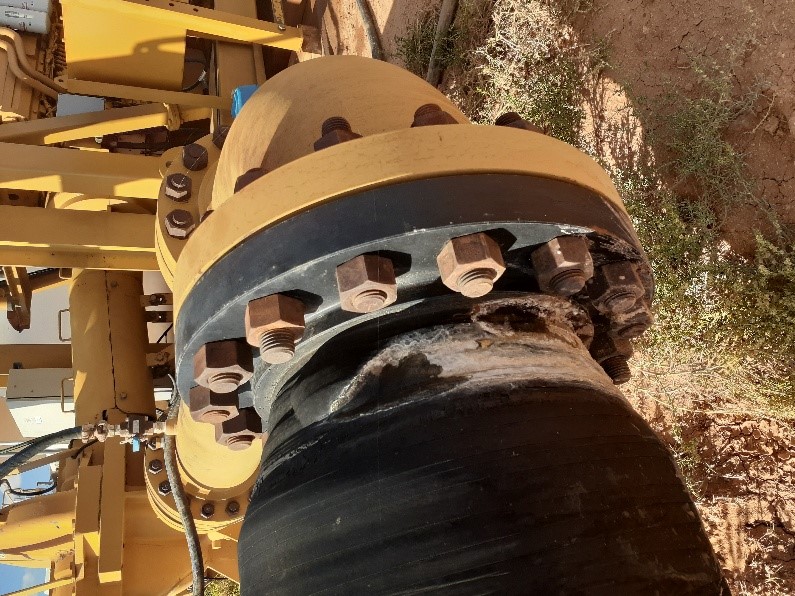
How to Select the Right Mining Hose for Your Application
Choosing the right mining hose or slurry hose is critical to reliability, safety, and long-term operating cost. The wrong hose can lead to leaks, rapid wear, downtime, and repeated replacement costs. The right hose can improve uptime, reduce maintenance, and deliver a lower total cost of ownership.
Every application is different, so selecting the correct hose starts with understanding how and where it will be used.
What Is Going Through the Hose?
The first question is simple: what product is moving through the hose?
Abrasive Slurry
For abrasive slurry containing ore, tailings, sand, or rock fines, wear resistance is usually the most important factor. In these applications, liner quality has a major impact on hose life.
Important factors include:
- Particle size
- Solids concentration
- Flow velocity
- Required service life
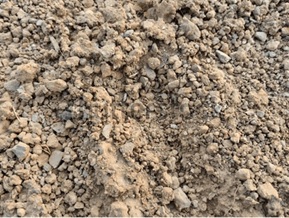
For demanding duties, a high-quality slurry hose with a premium abrasion-resistant liner is often the best solution.
Our Abrasatech® wear liner has world leading abrasion resistance and is our go to choice for most high wearing slurries.
Water Transfer
For water transfer applications such as dewatering, irrigation, or hydromining, flexibility, pressure rating, and handling are often more important than abrasion resistance.
Chemicals, Fuel or Hydrocarbons
If chemicals, oils, diesel, or hydrocarbons are being conveyed, a standard rubber hose may not be suitable. These applications require specially selected compounds designed for chemical resistance.
Always confirm compatibility before selecting a hose.
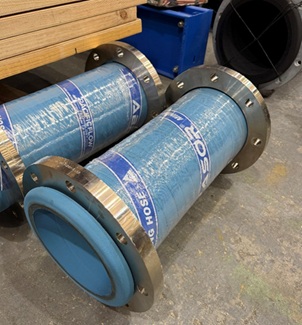
Pressure and Vacuum Requirements
Your mining hose must be suitable for both pressure and vacuum conditions.
Working Pressure
The hose should safely handle:
- Normal operating pressure
- Pressure surges
- Pump start-up spikes
Selecting too low a pressure rating can lead to failure. Selecting too high can add unnecessary cost and stiffness.
Vacuum Service
Suction lines, pump inlets, and dredging applications may require vacuum-rated hose. Standard hose can collapse under suction if not designed correctly.
Suction hose will always include:
- Wire helix reinforcement
- In some applications such as a dredge trunnion steel hoops may be used
This is especially important for slurry pump suction lines.
Connection Style
The hose connection style should suit your plant and maintenance requirements.
Flanged Ends
The most common option for slurry hose systems. Flanged ends provide a secure bolted connection and suits low to high pressure applications.
Common standards include:
- AS2129 (Table E, Table D etc.)
- ANSI B16.5 (CL150, CL300 etc.)
- ISO 7005 (PN16, PN16 etc.)
It is important to confirm the correct drilling pattern before manufacture.
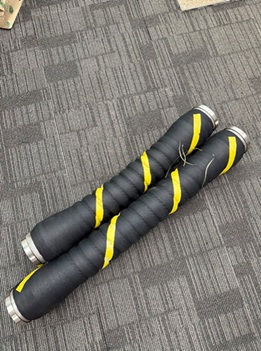
Victaulic / Grooved Ends
Often used where quick installation and easy maintenance are required.
Muff Couplings
Common for lines where hoses need to be cut to length on site.
Plain Ends / Cuffed Ends
Often used with muff couplings, or hose tail type couplings such as Bauer or Camlocks.
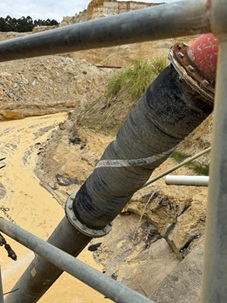
How Much Flexibility Is Required?
Not all mining hoses are equally flexible, and this can be critical in many applications.
Flexibility is important where there is:
- Tight bend radius
- Misalignment
- Pump vibration
- Equipment movement
- Frequent handling or coiling
If a hose is too stiff, it may kink, place stress on fittings, or fail early.
For applications requiring maximum flexibility, we can offer our Turboflex® range of mining hose —the most flexible mining hose in the world.
Selecting the right flexible hose can greatly improve service life and ease of use.
Special Operating Requirements
Some applications have special requirements that need to be considered when designing and manufacturing a mining hose.
High Temperature
Hot slurry, warm water, or elevated ambient temperatures can shorten hose life if unsuitable materials are used.
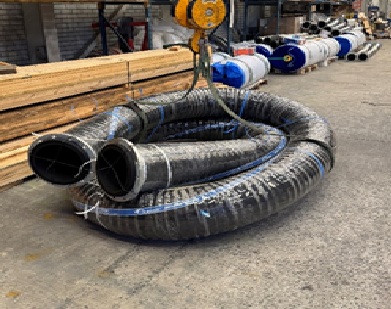
Fire Resistant / Anti Static
Coal mining and hazardous areas may require FRAS hose construction.
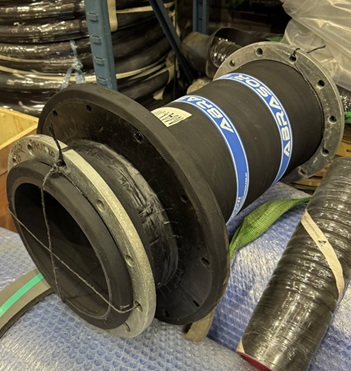
Flush Ports / branches
Ports, branches and extra flanges can be added on for specialty applications.
Final Thoughts
The best mining hose or slurry hose depends on the application. Material conveyed, pressure, vacuum, connection style, flexibility, and operating environment all affect performance.
When the right hose is selected, sites benefit from:
- Longer hose life
- Reduced downtime
- Easier installation
- Improved reliability
- Lower total cost of ownership
If you are unsure whether your current slurry hose is the best fit, reviewing the application with an experienced mining hose manufacturer can often deliver major improvements.
Hard Wall vs Soft Wall Mining Hose: Understanding the Key Differences
Choosing between hard wall mining hose and soft wall mining hose is an important part of selecting the right hose for your application. While both are used across mining and slurry transfer systems, they are designed for different duties and operating conditions.
Understanding the differences in construction, pressure capability, vacuum resistance, and handling can help improve reliability and reduce downtime.
What Is Hard Wall Mining Hose?
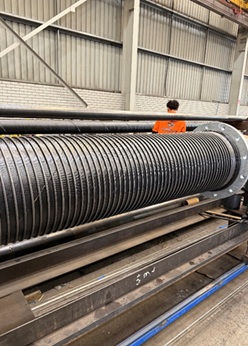
Hard wall mining hose is the most common style of mining hose used in the industry. It is suitable for both suction and discharge applications and is widely used across slurry handling systems such as process piping, tailings pipelines, pump suction spools, and dredge suction lines.
The key feature of hard wall hose is its reinforced construction with an internal wire helix. This wire helix supports the hose wall and prevents collapse under vacuum, making it ideal for suction lines and pump inlet duties. It also assists with pressure resistance, allowing our hard wall mining hoses to be manufactured with pressure ratings of up to 80 bar, depending on size and design.
What Is Soft Wall Mining Hose?
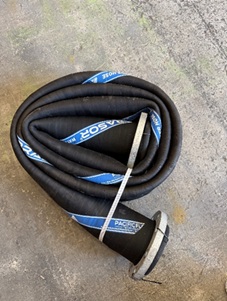
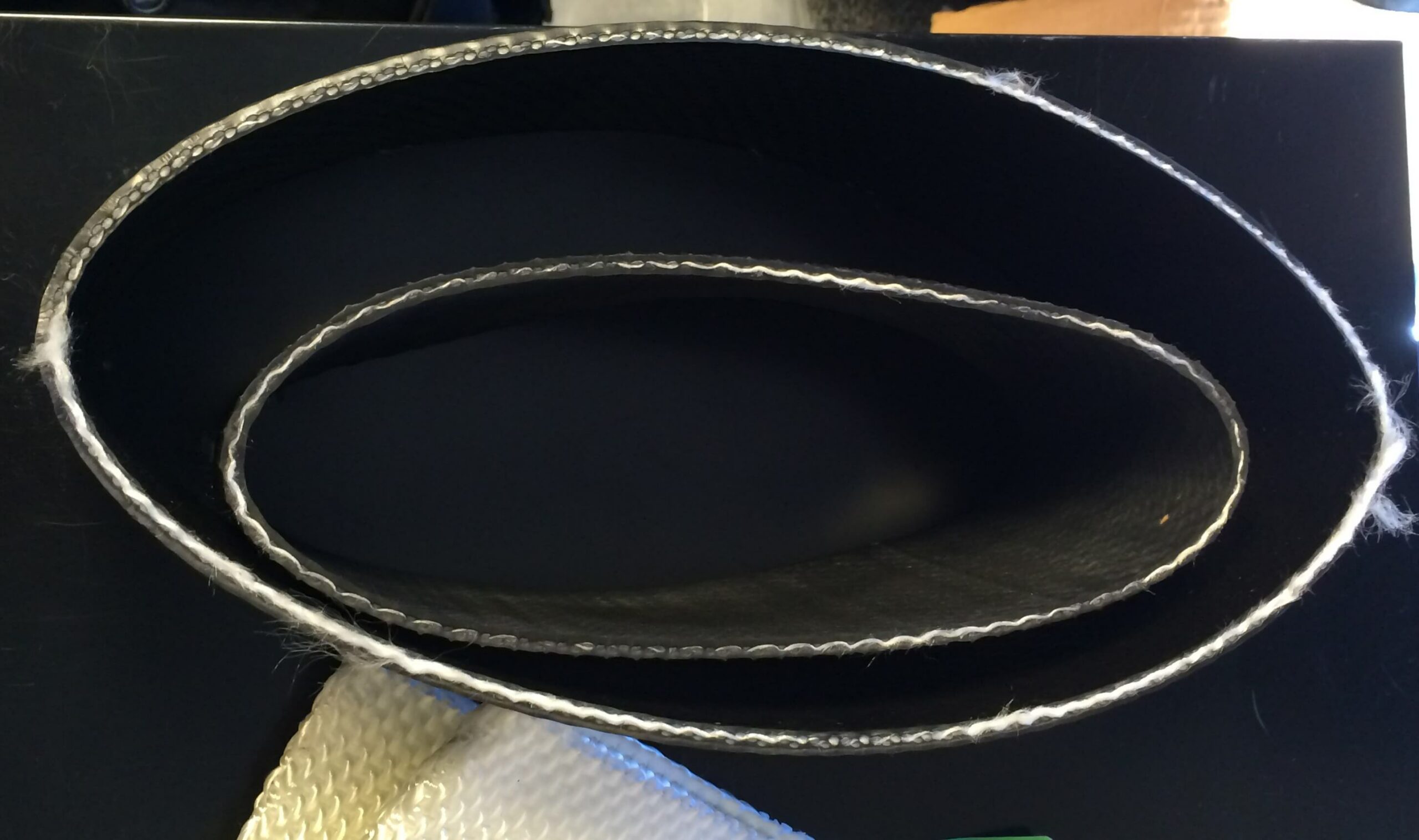
Soft wall mining hose does not contain a wire helix. Because of this, it is not suitable for suction or vacuum service and should only be used on discharge lines.
Unlike hard wall hose, soft wall hose naturally folds flat when not pressurised. Once pressure is applied, the hose opens up into its working shape. This makes it easier to move, handle, and store when not in use.
Soft wall hose is also lighter than hard wall hose, which can be a major benefit for temporary pipelines, mobile operations, or jobs requiring regular relocation. It can also be practical where hoses may be run over by equipment or flexed beyond the recommended radius, as the hose can flatten/ kink without any permanent damage.
Why Not Just Use Layflat Hose?
Soft wall hose is sometimes compared with layflat hose, but the two products are very different.
Layflat hose is generally designed for lighter-duty water transfer and lower pressure service. By comparison, soft wall mining hose is a heavy duty hand-made product lined with abrasion resistant rubber such as our Abrasatech compound.
It can be manufactured with built-in flanges and designed for much higher pressures than achievable with layflat.
This makes soft wall hose a far better option where slurry, higher pressure, or mining duty conditions are involved.
| Application | Recommended Hose Type | Why |
|---|---|---|
| Hose requires vacuum resistance for pump inlet or suction duty | Hard Wall Mining Hose | Internal wire helix prevents collapse under vacuum |
| Hose will operate under high pressure | Hard Wall Mining Hose | Wire helix and textile reinforcement is better suited to higher working pressures |
| Hose will be flexed beyond its recommend radius | Soft Wall Mining Hose | No wire helix removes the risk of permanent damage after kinking |
| Hose will be used on the discharge side of a pump or dredge | Hard Wall or Soft Wall Mining Hose | Both options can be suitable for discharge only applications |
| Hose must flex while maintaining round shape | Hard Wall Mining Hose | Holds shape during movement and bending |
| Lightweight temporary discharge line for dewatering | Layflat Hose | Easy to move, deploy and store for water transfer |
| Abrasive slurry discharge | Soft Wall Mining Hose | Higher pressure capability with high abrasion resistance |
| Permanent slurry process piping or tailings pipeline | Hard Wall Mining Hose | Durable solution for high wear resistance |
| Hose may be driven over by equipment | Soft Wall Mining Hose | Can flatten and recover without permanent damage |
Final Thoughts
The key difference between hard wall mining hose and soft wall mining hose is construction and intended duty.
Hard wall hose is the standard all-round option for suction and discharge applications. Soft wall hose is discharge only, but offers fold-flat storage, lighter handling, and practical benefits for temporary or mobile operations.
Choosing the right hose for the application can significantly improve hose life, ease of use, and total operating cost.
Please reach out to our team if you are still unsure on the right hose for your application.