
When designing a slurry pipeline, one of the biggest decisions is whether a ceramic lined hose or a rubber mining hose is the better solution. While ceramic hose is renowned for its exceptional abrasion resistance, rubber mining hose remains the preferred choice for many applications because of its flexibility, impact resistance and lower installed cost.
The reality is that neither option is universally better. Each has strengths that make it suitable for different parts of a pipeline. Understanding where each technology performs best can significantly increase service life while reducing maintenance costs and unplanned downtime.
Understanding Rubber Mining Hose
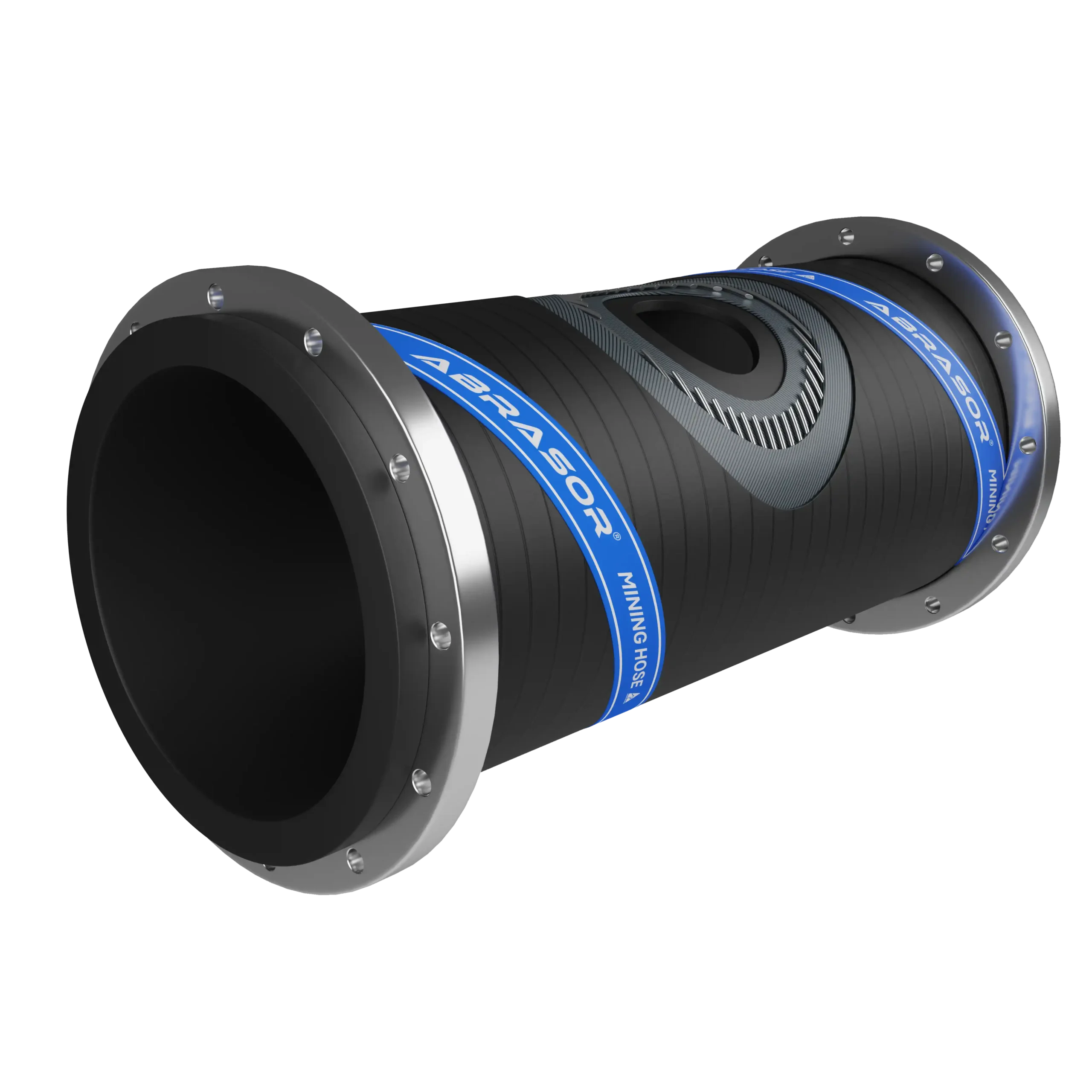
Rubber mining hose is manufactured using highly abrasion resistant rubber compounds reinforced with textile or steel reinforcement, depending on the application. The combination of a highly abrasion resistant rubber liner and flexible construction allows the hose to transport abrasive slurry while accommodating movement that would otherwise place stress on rigid pipework.
Its greatest advantage is flexibility. Unlike rubber lined or ceramic lined steel pipe, rubber hose can accommodate vibration, thermal expansion, misalignment and movement without introducing excessive loads into the pipeline.
For this reason, rubber mining hose is commonly used throughout tailings pipelines, dredge lines, hydrocyclone and mill feed lines, pump suction and discharge spools, and temporary bypass lines where movement is expected.
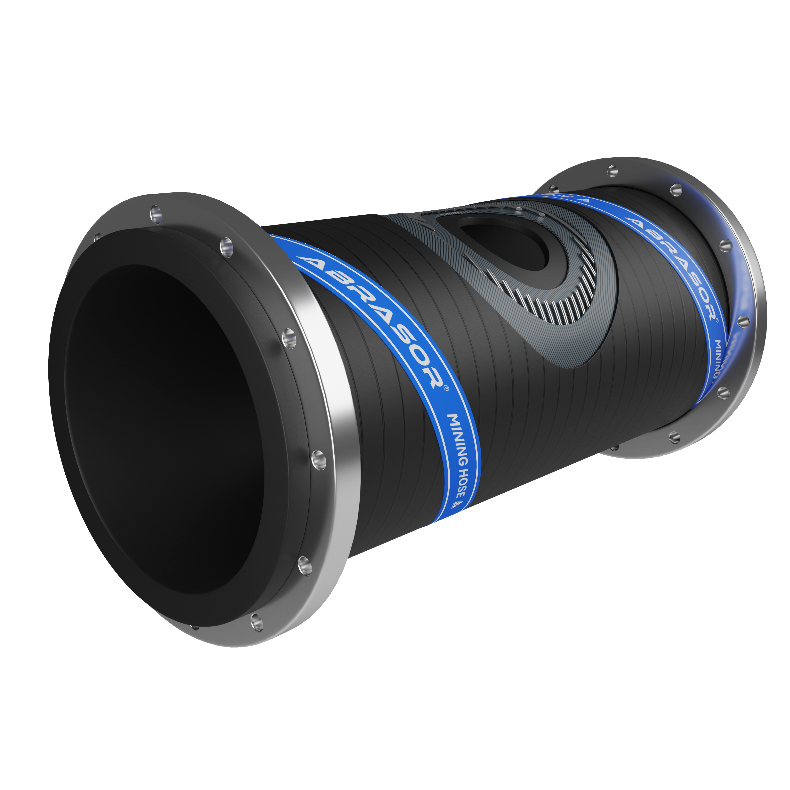
The ability to manufacture hoses in long lengths also reduces the number of joints, simplifying installation and lowering overall project costs.
Understanding Ceramic Hose
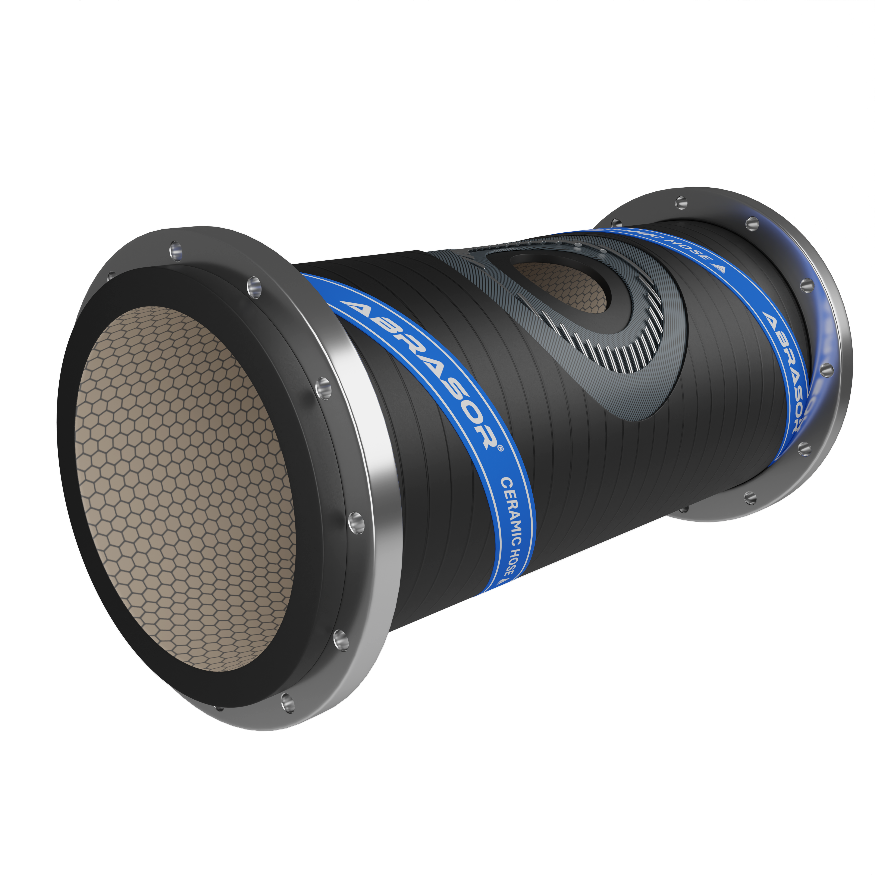
Ceramic hose combines the flexibility of a heavy-duty rubber hose with high density ceramic tiles hot vulcanised to the internal bore. Rather than relying entirely on rubber to resist wear, the ceramic tiles provide an extremely hard wearing surface that withstands severe sliding abrasion and particle erosion generated by high velocity slurries.
Ceramic hose is designed for extreme wear applications where conventional mining hose can wear rapidly, particularly where material repeatedly impacts the same section of pipe.
These hoses are typically installed in cyclone underflow lines, slurry pump reducers, bends, elbows and other pipeline direction changes, where severe abrasion is concentrated and maximising service life is the primary objective.
Although ceramic hose is significantly more wear resistant, it is generally heavier, less flexible and more expensive than standard rubber mining hose.
Where Rubber Mining Hose Performs Best
Rubber mining hose performs exceptionally well wherever flexibility is just as important as abrasion resistance.
Long slurry pipelines naturally experience movement from thermal expansion, ground settlement, pressure fluctuations and equipment vibration. Rubber hose absorbs these movements without creating the high stresses that occur in rigid piping systems.
Rubber mining hose also offers superior impact resistance where larger rocks or coarse material strike the hose wall. The resilient rubber liner absorbs impact energy far more effectively than ceramic, reducing the risk of cracking or localised damage. Rubber compounds can also be formulated to provide increased cut and tear resistance for these demanding applications.
This makes rubber hose particularly well suited to tailings pipelines, dredge pipelines, hydromining systems, mine dewatering, pump connections, hydrocyclone underflow lines and temporary transfer lines.
Where Ceramic Hose Performs Best
Ceramic hose is most effective where abrasion is concentrated into a relatively short section of pipeline.
Rather than wearing evenly throughout the line, many slurry systems experience severe localised wear at bends, cyclone feed lines and pump discharge elbows. In these locations, slurry particles continually strike the same area at high velocity, causing conventional rubber liners to wear much more quickly.
Installing ceramic hose only in these critical sections can dramatically increase service life while reducing shutdowns and replacement frequency.
For this reason, ceramic hose is widely used around mineral processing plants where abrasion is at its highest.
Why Ceramic Isn’t Always the Best Choice
A common misconception is that ceramic hose should replace rubber mining hose throughout an entire slurry pipeline.
In reality, this approach often increases project costs without providing proportional benefits.
Ceramic hose is more expensive to manufacture, heavier to install and less flexible during operation. Ceramic hose can also be less suitable in applications containing very large, high-impact particles, where repeated impacts may damage individual ceramic tiles over time.
In long pipeline runs where wear is relatively uniform, the additional abrasion resistance often provides little practical advantage over a premium rubber mining hose.
Instead, the best performing systems typically use ceramic only where the additional wear resistance delivers a measurable return on investment.
Combining Both Technologies
Rather than choosing one material over the other, many mining operations achieve the best results by combining both technologies throughout the pipeline.
Rubber hose provides flexibility, vibration absorption and cost-effective installation across long pipeline sections, while ceramic hose protects the small number of locations exposed to extreme abrasion.
| Pipeline Location | Recommended Solution | Why |
|---|---|---|
| Long straight runs | Rubber mining hose | Flexible and cost-effective over long distances |
| Pump suction | Rubber mining hose | Absorbs movement, vibration and pressure fluctuations |
| Dredge pipelines | Rubber mining hose | Accommodates movement and simplifies installation |
| Tailings pipelines | Rubber mining hose | Long continuous lengths with lower installed cost |
| Cyclone and mill feed lines | Rubber mining hose | Suitable for long pipeline runs and easier installation |
| Cyclone underflow | Application Specific | Rubber mining hose for high-impact bends and directional changes; ceramic hose for straight sections dominated by sliding abrasion. |
| Pump discharge reducers | Ceramic hose | Protects areas of concentrated wear and increased velocity |
| Directional bends | Ceramic hose | Resists concentrated wear, particularly on the outer radius |
| High-wear mining hose spools | Ceramic hose | Significantly extends service life in critical wear locations |
Choosing the Right Hose
The question isn’t whether ceramic hose or rubber mining hose is better—it is which solution is best suited to each section of the pipeline.
Selecting the correct hose for each application can significantly extend service life, reduce maintenance requirements and lower the total cost of ownership.
At Pacific Flow Technology, we manufacture both premium Mining Hose and Ceramic Hose, allowing us to recommend the most appropriate solution for every section of a slurry pipeline. Rather than promoting a single product, we work with customers to combine both technologies where they deliver the greatest performance, reliability and value.