
Complete Mining Hose Installation Guide
Correct installation is one of the most important factors in achieving maximum service life from any mining hose or slurry hose. Even the highest quality hose can fail prematurely if it is handled incorrectly, misaligned during installation, or poorly maintained in service.
Following the below guide will help improve reliability, reduce downtime, and maximise hose life.
1. Safe Handling and Lifting
Mining hoses are most susceptible to damage during handling and installation. Incorrect lifting methods can cause kinking, crushing, or permanent deformation, which may lead to premature failure once in service.
Kinking can be avoided by using the correct lifting techniques.
Recommended Lifting Methods
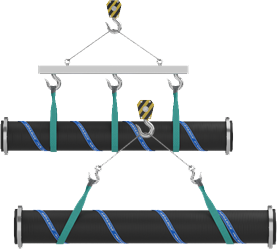
Hoses should ideally be lifted using a spreader lifting bar with fabric straps supporting the hose at three points. This provides even support and minimises bending stress. Refer to Figure 1.1
Where a spreader bar is not available, a two-point lift is acceptable provided the straps are positioned carefully at the quarter points of the hose length. Refer to Figure 1.2
Do not lift from a single point, as this can cause the hose to fold sharply, kink, and suffer internal damage. Refer to Figure 1.3
Never use chains, wire rope, or sharp hooks directly on the rubber cover.
2. Hose ID Alignment
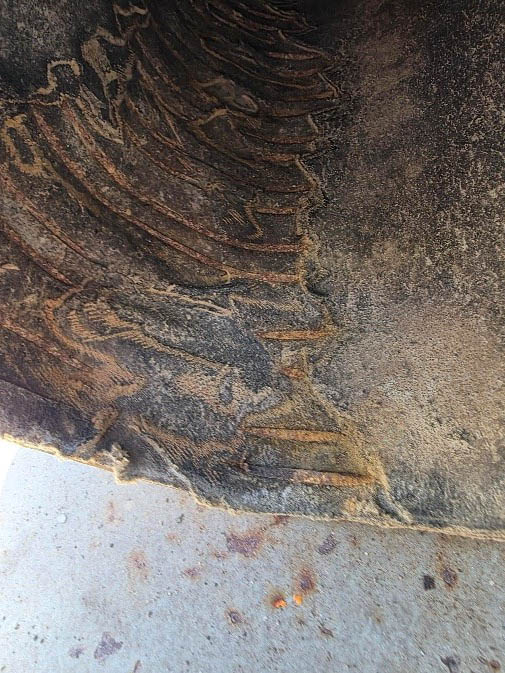
It is critical when installing your mining hose that the internal diameter (ID) of the hose aligns correctly with adjoining pipework.
Poor alignment can create:
- Premature leading-edge wear
- Turbulent slurry flow
- Pressure loss
- Increased liner wear
- Reduced hose life
The hose should match the adjoining pipeline as smoothly as possible without internal steps or restrictions.
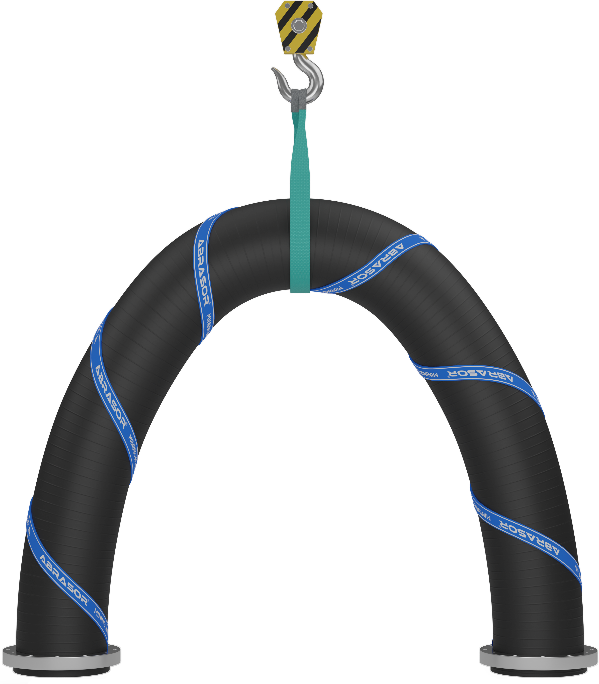
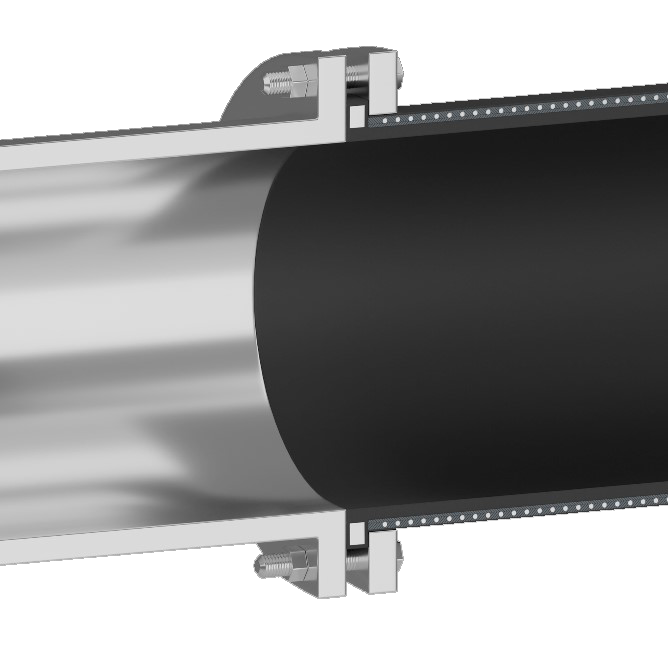
Figure 2.1 shows correct hose ID alignment.
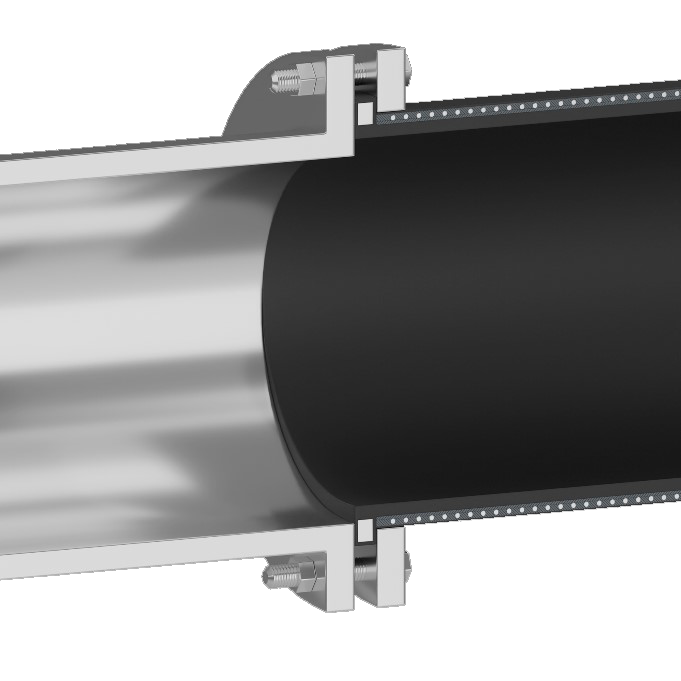
Figure 2.2, 2.3 shows poor ID alignment and resulting premature wear on the leading edge.
Never use the hose to pull misaligned pipework into position.
3. Flange Bolting
Most mining hoses use a beaded end with a self-sealing face. It is important these are bolted correctly using the appropriate torque figures.
Incorrect bolting can result in leaks, movement, damaged beads, or flange distortion.
Rough Starting Torque Guide
(For rubber beaded end mining hose to flat steel flange face only)
| Pressure Rating | Recommended Starting Torque |
|---|---|
| 150 PSI / 10 Bar | 80 Nm |
| 300 PSI / 20 Bar | 100 Nm |
| 450 PSI / 30 Bar | 200 Nm |
Important: These torque values do not apply to other connection styles such as:
- Rubber-to-rubber joints
- Fixed flanges
- Flanged couplings
- Victaulic ends
Different procedures may apply.
For a complete bolting guide, refer to our Mining Hose Bolt Torque Guide.
4. Hose Positioning and Support
Long runs of mining hose should always be properly supported to reduce strain on the hose ends and flanges. Failure to support correctly can lead to premature wear, leakage, or structural failure.
General Support Guidelines
- Horizontal hose runs should typically be supported every 2 metres
Refer to Figure 4.1 - Use smooth, non-abrasive supports to avoid damaging the outer cover
- Add protective padding where supports contact the hose
- At bends, use curved supports to maintain the minimum bend radius
Refer to Figure 4.3 - For vibrating or moving equipment, use rollers or flexible brackets that allow controlled movement
- Never allow the hose to carry the weight of unsupported steel pipework

Bend Radius
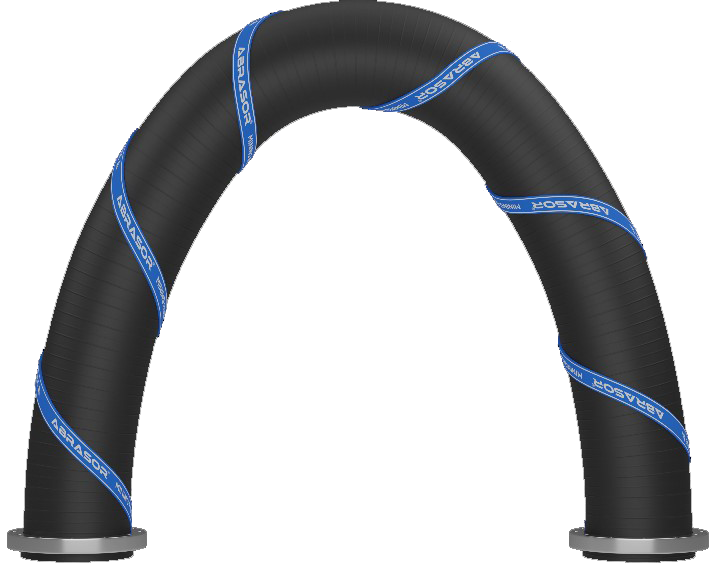
When flexing a hose into place, always confirm the hose remains within its minimum bend radius.
If bent tighter than recommended, the hose may kink and fail prematurely.
Refer to Figure 4.4 for how to calculate minimum bend radius.
- Mining hose bend radius is commonly expressed as a multiple of the hose nominal bore (NB), referred to as “D”
- For example, a 6D bend radius on a DN150 hose means:
6 × 150 mm = 900 mm bend radius
5. Maintenance and Inspection
Routine inspection and maintenance will significantly increase slurry hose life.
Recommended Maintenance
- Rotate the hose 90 degrees at regular intervals to promote even wear
- Flush or drain the hose after use where possible
Inspection Checklist
Regular inspections should check for:
- External cover wear or cuts
- Kinking or over-flexion
- Liner wear
- Loose bolts or leaks
Replace hoses showing signs of serious deterioration before failure occurs.
6. Storage
When not in use, mining hose should be stored correctly to preserve rubber life.
Storage Recommendations
- Store in a cool, dry location
- Keep away from direct sunlight
- Keep away from high temperatures or heat sources
Correct storage helps prevent rubber hardening, cracking, and premature ageing.
Final Thoughts
Correct handling, alignment, bolting, support, and maintenance are all essential to maximising mining hose performance.
A properly installed hose will provide:
- Longer service life
- Reduced downtime
- Improved safety
- Better wear performance
- Lower total operating cost
If unsure about any installation detail, always consult your mining hose supplier before commissioning.